Signs of Poor Roof Ventilation (and Why It Matters)
A hot attic, moisture, mold, and premature shingle aging all signal poor roof ventilation — which can void warranties. Learn the warning signs.
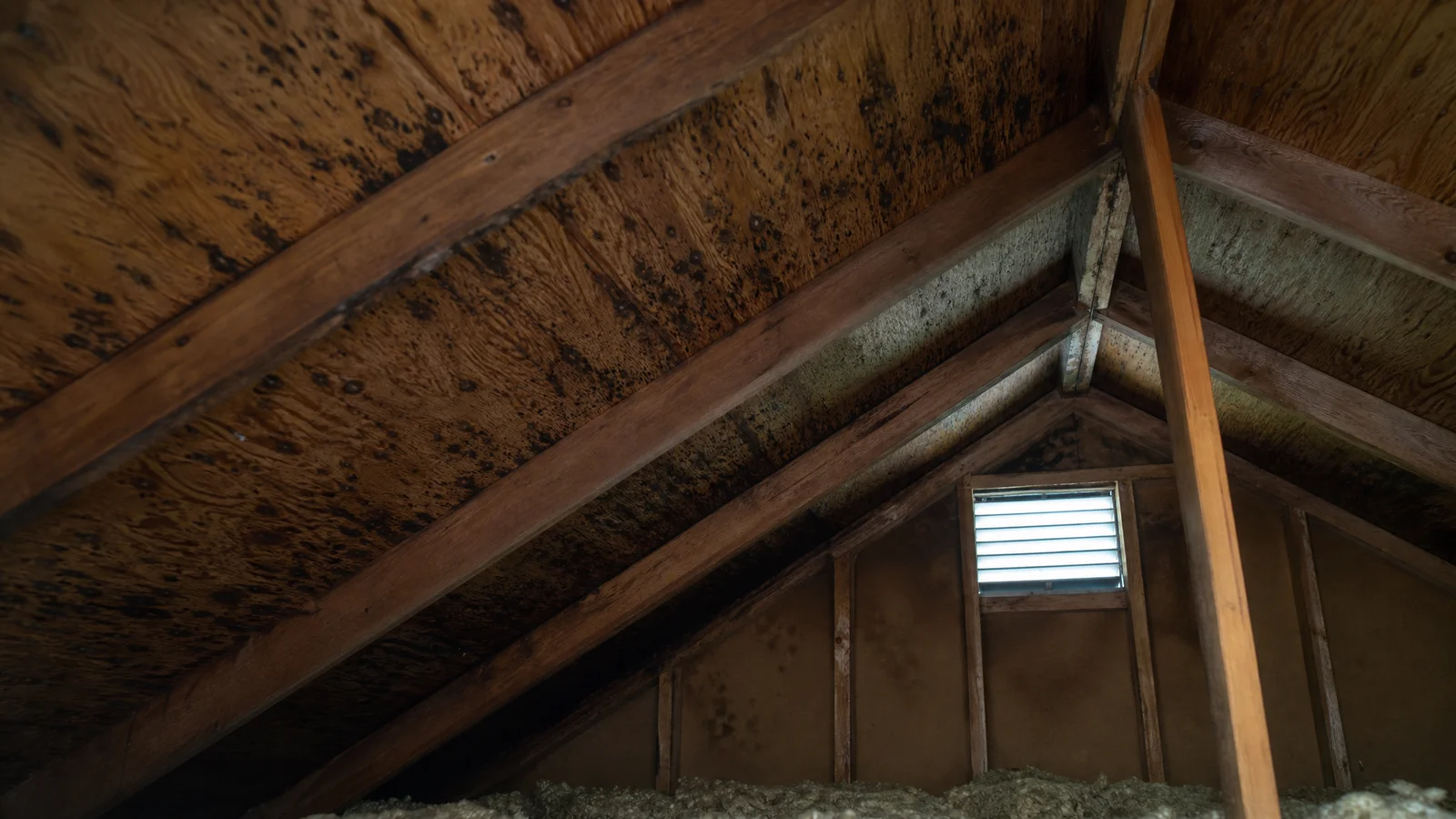
We know that poor attic ventilation is one of the fastest ways to shorten roof life in Connecticut. The signs of poor roof ventilation are often the hardest problems for homeowners and business owners to spot.
Our professional service team sees this specific issue on jobsites every single week.
Fixing it early saves you thousands of dollars and prevents premature roof failure. We will break down exactly what to look for, why it voids warranties, and how to solve it permanently.
The five warning signs of poor roof ventilation
1. Hot attic in summer
A 130°F+ attic on a warm afternoon is a clear indicator of blocked airflow. That trapped heat literally bakes your asphalt shingles from the underside.
We frequently measure summer attic temperatures soaring past 150°F in poorly ventilated homes. The U.S. Department of Energy reports that this severe heat buildup can hike your cooling costs by up to 15%.
Our crews always check the temperature difference between your attic and the shady side of your house. A dramatic difference confirms a serious roof ventilation problem.
2. Frost on the underside of the roof deck in winter
Warm, moist indoor air naturally rises into your attic space during the winter months. This moisture condenses on cold roof sheathing and creates a layer of frost.
We often find extensive water damage when this frost melts and drips onto the insulation below. Wet sheathing eventually rots, compromising the structural integrity of your entire roof deck.
Our inspections regularly reveal that bad attic ventilation signs like this go unnoticed until the interior ceiling stains appear.
3. Musty smell or visible mold in the attic
Trapped moisture creates the ideal environment for mold growth on wooden attic surfaces. Mold in this dark space is almost always a direct result of poor air sealing and inadequate venting.
We have seen minor condensation issues turn into massive mold remediation projects in a matter of months. Modern indoor air quality standards for 2026 highlight that attic mold can eventually impact the air you breathe downstairs.
Our mitigation strategy focuses on stopping the moisture source before treating the damaged wood.
4. Ice dams every winter
Connecticut winters are notorious for creating destructive ice dams along the roof eaves. Poor ventilation acts as the primary driver for this expensive winter damage.
We see this cycle constantly: warm air escapes into the attic, melts the roof snow, and then the water refreezes at the cold overhangs. The resulting ice block forces trapped water backward under your shingles and directly into your living space.
Our team has completely eliminated repeat ice dams for hundreds of Hartford County clients simply by balancing their attic airflow.
5. Shingles wearing out before their expected lifespan
A 20-year architectural roof that looks ruined at year 12 often suffers from severe heat damage. UV rays from the sun simply do not destroy modern roofing materials that quickly on their own.
We pull up curled, blistered shingles constantly and immediately check the soffit vents. A frying-pan effect from the hot attic destroys the asphalt adhesive much faster than normal weather exposure.
Our data shows that proper airflow literally doubles the functional life of your roofing surface.
Why it matters: warranty implications
Major shingle manufacturers like GAF and Owens Corning mandate balanced attic ventilation as a strict warranty condition. This critical requirement applies to their standard products and their premium 50-year non-prorated packages.
We handle warranty claims regularly and can tell you that airflow is the very first thing an inspector checks. If your shingles fail early, the manufacturer will void the coverage if your intake and exhaust do not meet their specifications.
Our certified installers follow the exact factory guidelines to ensure your investment stays fully protected.
| Manufacturer | Premium Warranty Example | Ventilation Requirement |
|---|---|---|
| GAF | Golden Pledge (50-Year) | Strict 1:300 rule compliance |
| Owens Corning | Platinum Protection | Balanced intake and exhaust |
| CertainTeed | SureStart Plus | Requires continuous ridge venting |
Even a flawlessly nailed roof will lose its protection if the attic space cannot breathe. This warranty denial is a harsh reality for many property owners facing early roof failure.
We always document the final ventilation setup with photos to guarantee your warranty registration is completely bulletproof.
What “balanced ventilation” means
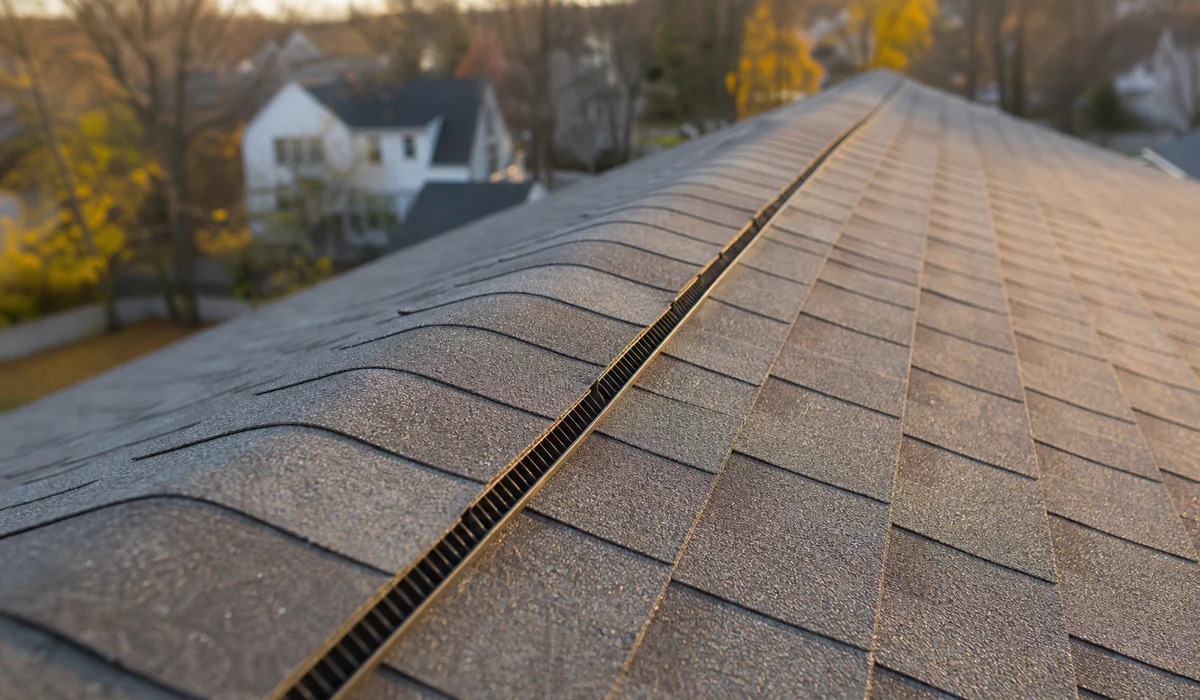
Balanced ventilation simply means your roof has an equal way for air to get in and a way for it to get out. The U.S. Department of Energy recommends a 1:300 ratio, meaning one square foot of ventilation for every 300 square feet of attic floor space.
We strictly follow this proven mathematical formula on every single residential and commercial project. Too much exhaust without matching intake pulls conditioned air straight from your living room into the attic.
Our goal is to keep the attic temperature within 10 to 15 degrees of the outside air year-round.
The Intake Side
Cool, fresh air must enter the attic from the lowest point of the roofline. This critical intake primarily happens at the edges of your home.
We typically install or clear the following intake components to feed the system:
- Soffit vents: The most common and effective intake method located under the eaves.
- Gable-end vents: Used in specific architectural designs as an air entry point.
- Attic baffles: Plastic chutes that ensure loose-fill insulation never blocks the fresh air path.
The Exhaust Side
Hot, moist air naturally rises and needs a clear exit path near the peak of the roof. Exhaust vents complete the airflow circuit and push the heat outside.
Our preferred exhaust methods include these reliable options:
- Continuous ridge vents: Installed along the entire peak for maximum, even airflow.
- Static roof vents: An older box-style approach that requires multiple units across the deck.
- Solar attic fans: Active units that expel heat, but these require at least R-30 insulation to work efficiently.
Common ventilation problems in Hartford County homes
Many older properties in Connecticut were built before modern energy codes required proper roof ventilation.
We constantly run into outdated construction methods that stifle airflow and create hidden damage. Identifying these specific local issues helps us design a targeted, permanent solution for your property.
Our technicians see these specific issues almost every day in Hartford County:
- Painted-shut soffit vents: Older homes often have replacement siding or heavy paint jobs that completely block the original airflow holes.
- Insulation blocking soffits: Homeowners often push bulk fiberglass insulation tight against the roof deck at the eaves, choking off the intake air.
- Lack of continuous ridge venting: Many 20th-century homes rely on a few static box vents, which simply cannot move enough air to keep the attic cool.
- Mixed exhaust systems: Combining gable vents with a new ridge vent often short-circuits the airflow and traps dead air in the corners.
- Bathroom fans venting into the attic: Exhaust hoses must expel shower humidity directly to the outside, never into the enclosed attic cavity.
How we fix it
Upgrading your attic airflow is one of the most cost-effective ways to protect your property and lower your energy bills.
We approach every repair by calculating your exact intake and exhaust needs based on 2026 building standards. A typical residential ventilation upgrade runs between $500 and $3,000 depending on the scope of the carpentry required.
Our team executes a precise checklist to restore perfect balance to your home:
- Adding continuous ridge vent openings along the entire roof peak.
- Cutting new soffit vent panels for maximum air intake.
- Installing rigid foam baffles to keep insulation from migrating into the airflow path.
- Rerouting and sealing bathroom and dryer exhaust ducts directly to the exterior walls.
- Air-sealing gaps around ceiling fixtures to stop expensive conditioned air from escaping.
Compared to the $15,000 or more it costs to replace a rotted roof, fixing your airflow is a highly profitable investment.
We encourage property owners to act on these signs of poor roof ventilation before the next severe weather season hits.
You can explore our ventilation and ice dam repair service to see how we handle complex winter damage.
If you suspect an issue right now, simply request a ventilation assessment so our experts can diagnose your home today.
Frequently Asked Questions
Can bad ventilation void my warranty? ▼
Yes. Many shingle manufacturer warranties require adequate ventilation to stay valid. A ventilation failure that damages shingles isn't covered when it caused the damage.
How do I know my attic is too hot? ▼
Excess summer heat compared to outside, winter frost on sheathing, and musty odors are the main tell-tale signs. Attic temperatures over 130°F in summer are common with poor ventilation.
Can adding vents make it worse? ▼
Yes, if intake and exhaust get out of balance. Too many exhaust vents without matching intake can pull conditioned air out of the house or reduce airflow through the attic. Balance matters.
Ready to talk to a roofer?
Read about our roof ventilation & ice dam repair service or get a free estimate.
Related Guides
How to Prevent Ice Dams This Winter
Prevent ice dams with better attic insulation, balanced ventilation, ice-and-water shield, and gutter care. A CT homeowner's winter roof guide.
Ridge Vents vs. Soffit Vents: How Roof Ventilation Works
Ridge and soffit vents work together as exhaust and intake. Learn how balanced roof ventilation protects your shingles and when each is added.