Ridge Vents vs. Soffit Vents: How Roof Ventilation Works
Ridge and soffit vents work together as exhaust and intake. Learn how balanced roof ventilation protects your shingles and when each is added.
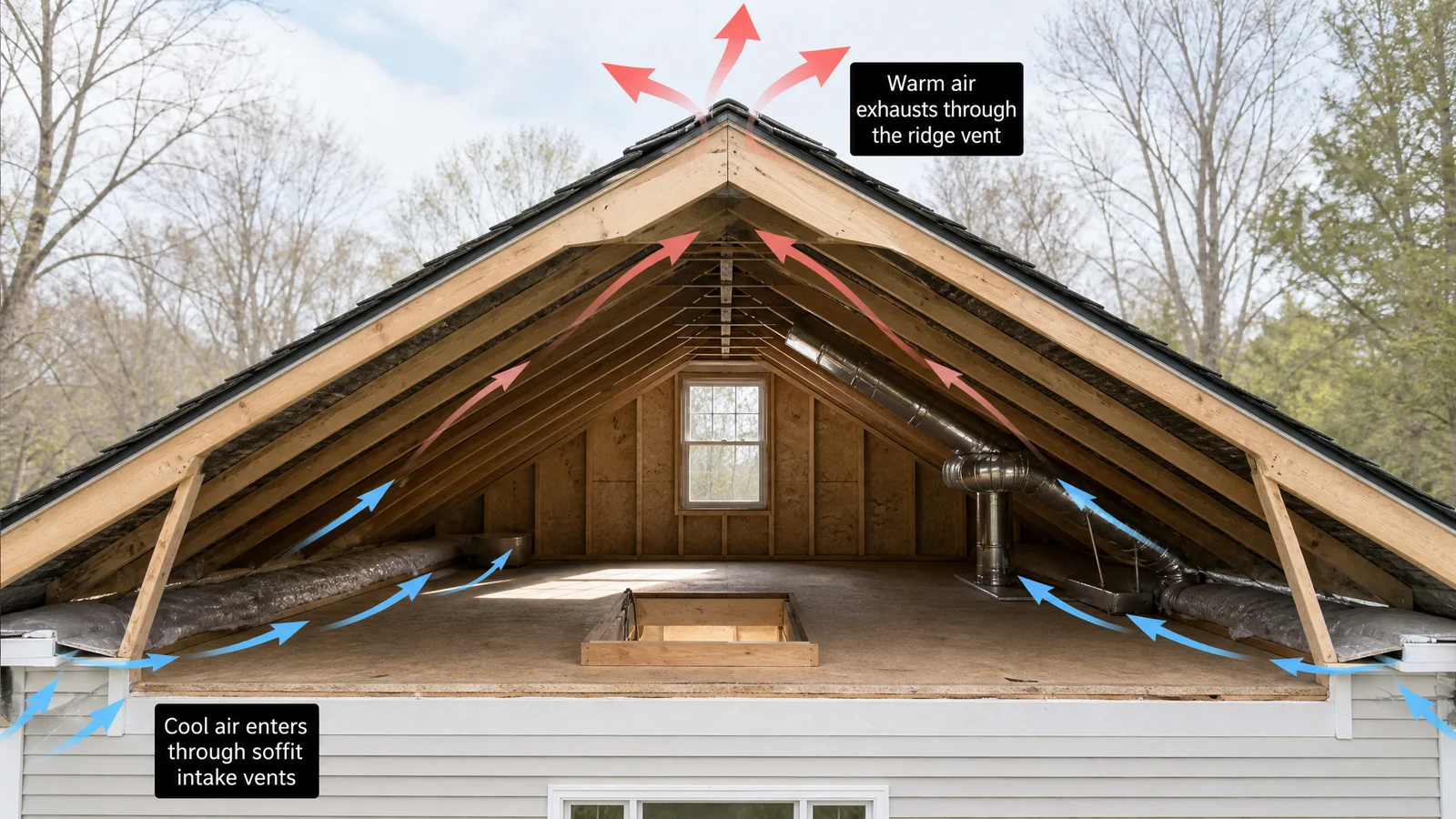
From what we see during inspections, US homeowners often spend thousands trying to cool a 150-degree attic using the wrong methods.
Roof ventilation is simply a two-part system: cooler air flows in through soffit vents, and hot air escapes out through ridge vents. Neither component works properly without the other.
We frequently explain that a ridge vent vs soffit vent comparison misses the point, because they are partners in a complete system. Let’s look at how these roof ventilation types function together to create balanced attic ventilation.
The exact mechanics, common points of failure, and the specific codes will dictate how well your home breathes. Our team will break down exactly what you need to know to fix a hot attic.
Soffit vents (intake)
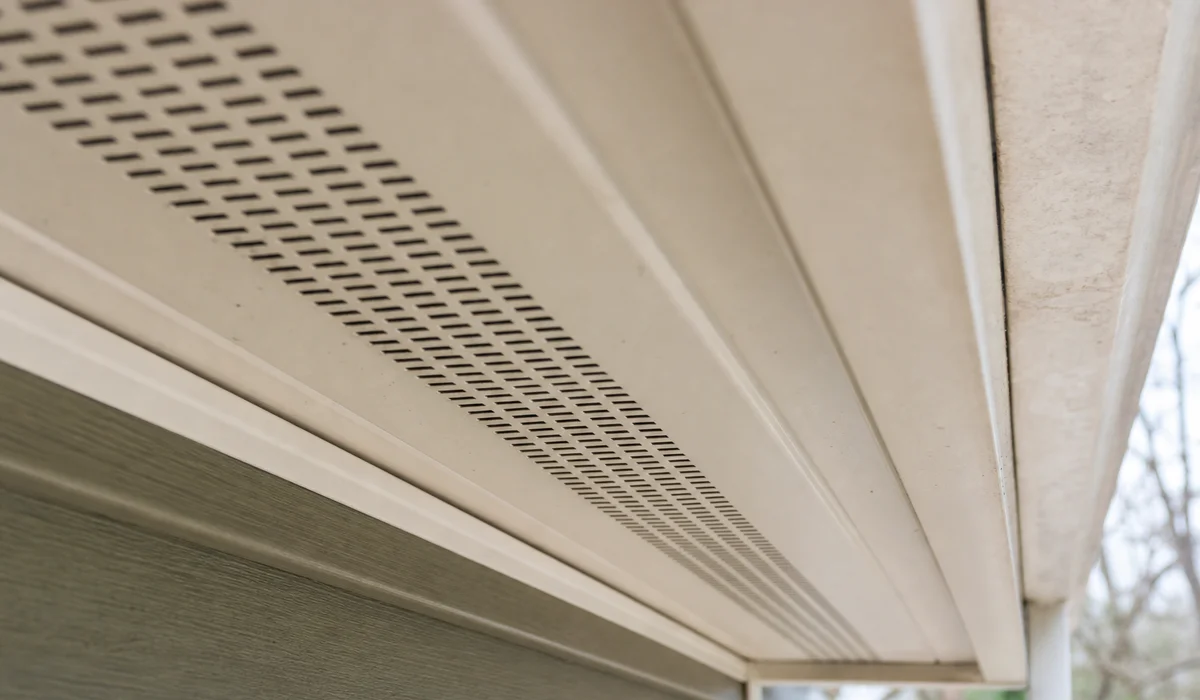
Soffit vents act as the intake engine for your roof, located directly under the eaves in the horizontal overhang. These openings pull fresh, cool outside air into the lowest point of the attic space. We rely on them to push out the stagnant heat that bakes your shingles from the inside.
Types of Soffit Vents
- Continuous strip vents: This style is the most common on newer US construction and provides maximum intake area.
- Individual round or rectangular vents: Builders often used these in older construction, though they offer less airflow per foot.
- Perforated aluminum soffit panels: These panels combine a finished look with microscopic intake holes.
Where Intake Fails
Without constant airflow, your attic temperature can easily hit 140°F on a standard 95-degree summer afternoon. We constantly find these critical vents failing for a few specific reasons.
The airflow gets choked when contractors lay thick fiberglass batts directly over the eaves. Install foam baffles, like the Owens Corning Raft-R-Mate, to keep that channel open.
- Blocked by insulation: Laying insulation directly against the roof deck at the eaves restricts fresh air.
- Painted shut in a remodel: House painters often spray right over the perforations by mistake.
- Undersized for the attic volume: Older homes sometimes rely on tiny round vents that cannot meet modern building codes.
- Missing entirely: Many mid-century homes were built with solid wood soffits and zero intake.
Ridge vents (exhaust)
Ridge vents are continuous exhaust strips installed along the very peak of the roof and hidden neatly under cap shingles. They allow trapped, rising warm air to escape at the highest possible point of your attic. Our crews prefer this method because it works completely passively using the natural buoyancy of hot air.
Types of Ridge Vents
| Vent Type | Design Profile | Common NFA (Net Free Area) |
|---|---|---|
| Rigid Ridge Vent | Hard plastic sections (e.g., GAF Cobra Rigid Vent 3) | 18 sq. inches per foot |
| Roll-Out Mesh | Flexible fiber mesh installed from a roll | 14 to 16 sq. inches per foot |
Why This Exhaust Method Wins
Rigid products typically include an internal weather filter that blocks wind-driven rain and snow from blowing back into your house. We recommend this exhaust style over traditional pot vents for several reasons. Heat escapes evenly across the entire length of the ridge line.
- Continuous airflow: Exhaust leaves evenly along the whole ridge, rather than in concentrated spots.
- Weather-tight reliability: A properly nailed rigid vent stops moisture intrusion during heavy storms.
- Curb appeal: The low profile hides completely under your specialized ridge cap shingles.
How they work together
The exhaust and intake only function correctly when they work together to form a thermal siphon. Nature does the heavy lifting through a process known as the stack effect. We design these systems to replace hot air instantly with cool air.
The Natural Airflow Cycle
- The summer sun beats down and heats the roof deck.
- Trapped attic air warms up rapidly.
- Warm air naturally rises to the highest point at the ridge.
- The pressure pushes this hot air out through the ridge vent.
- This exit creates a vacuum that pulls cool air in through the soffit vents.
- The continuous cycle keeps the attic temperature much closer to the outside temperature.
The Math Behind Balanced Ventilation
Contractors call this setup balanced attic ventilation because the total intake area must roughly match the exhaust area. The International Residential Code (IRC) uses Net Free Area (NFA) to measure this open breathing space. We always check these NFA ratios before signing off on a new installation.
Our standard US building code requires the 1/300 rule for balanced systems. This rule dictates 1 square foot of vent area for every 300 square feet of attic floor space. You must split this total requirement evenly, 50/50, between the lower intake and the upper exhaust.
If your system is unbalanced or lacks a vapor retarder in cold climates, the IRC defaults to the stricter 1/150 rule.
Why not just gable vents?
Gable-end vents sit in the triangular wall at the ends of your roof, and while they can work, they often short-circuit the ideal airflow path. Air travels the path of least resistance, which usually means blowing straight across the top of the attic from gable to gable. We find this horizontal breeze completely bypasses the lower roof deck where heat and moisture actually build up.
Combining a ridge system with soffit intakes guarantees a smooth, even wash of air across the entire underside of the roof deck. This strategy prevents hot spots from forming above your bedrooms.
Common Gable Configurations
- Common design: Ridge plus soffit alone. You board up or remove the gable vents entirely.
- Occasionally OK: Ridge plus soffit plus very small gable vents used strictly as secondary intake. This setup depends heavily on the specific roof geometry.
- Not great: Ridge exhaust paired with gable vents, but no soffit intake. The ridge pulls air directly from the gable, leaving the lower eaves to bake.
What causes ventilation to fail
Ventilation fails when physical blockages or competing pressure systems disrupt the natural chimney effect. Moisture accumulation is usually the first warning sign, followed by curling shingles or unusually high cooling bills. We inspect hundreds of failing roofs and see the same critical mistakes repeated.
Common Pitfalls to Avoid
- Mixing exhaust types: Pairing a ridge vent with a powered attic fan is a major error. The motorized fan will actually pull rain and snow backward through the ridge vent.
- Venting bathrooms into the attic: An exhaust fan dumps gallons of warm, humid water vapor directly into your insulation, which causes rapid mold growth.
- Blocked soffit panels: Insulation gets shoved tight against the roof deck at the eaves. You must install hard plastic baffles to maintain the air channel.
- Using static box vents poorly: Builders sometimes scatter standard box vents across a roof where a continuous ridge strip would have been far more efficient.
- Missing intake: Installing a premium ridge exhaust without clearing out the soffit intakes creates a vacuum that pulls conditioned air straight out of your living room.
When we add or upgrade ventilation
Upgrading your ventilation usually happens during a major remodeling project or when severe symptoms force a change. A perfectly balanced system protects your structural wood and keeps your energy costs down. We strongly suggest evaluating your NFA calculations before starting any major exterior project.
Key Triggers for an Upgrade
- Full roof replacement: You must always evaluate and correct the airflow path before laying new shingles.
- Manufacturer warranty compliance: Major brands like GAF and Owens Corning will void your 50-year shingle warranty if the ventilation fails to meet local codes.
- Ice-dam prevention: Heat escaping into the attic melts snow on the roof, which then freezes at the cold eaves. Proper airflow is one of the four main levers to stop this cycle.
- Attic renovations: Finishing an attic changes the volume and requires a complete reassessment of the airflow.
- Ongoing heat issues: If your second floor feels like an oven in July, a restricted exhaust is a likely culprit.
Finding the exact cause of a hot roof takes a sharp eye and accurate math. See our ventilation service guide to learn more about how airflow stops winter damage.
You can also request an assessment to have a professional calculate your specific needs.
Frequently Asked Questions
Do I need both ridge and soffit vents? ▼
For continuous ridge-vent systems, yes. Soffit vents pull cool air in, ridge pushes hot air out. Both together is the strongest design. Alternative systems (gable vents, box vents) can work but usually less effectively.
Will more vents help? ▼
Only if intake and exhaust stay balanced. Adding more exhaust without matching intake can actually reduce airflow through the attic — it just pulls conditioned air from the house instead.
Can I have too much ventilation? ▼
Not really in CT — cold-climate attics benefit from more airflow. The bigger risk is imbalanced ventilation, not excessive.
Ready to talk to a roofer?
Read about our roof ventilation & ice dam repair service or get a free estimate.
Related Guides
How to Prevent Ice Dams This Winter
Prevent ice dams with better attic insulation, balanced ventilation, ice-and-water shield, and gutter care. A CT homeowner's winter roof guide.
Signs of Poor Roof Ventilation (and Why It Matters)
A hot attic, moisture, mold, and premature shingle aging all signal poor roof ventilation — which can void warranties. Learn the warning signs.