Roof Leak Repair vs. Replacement: When a Leak Means a New Roof
When does a roof leak mean a full replacement? Compare isolated vs. systemic leaks, decking damage, and roof age to make the right call.
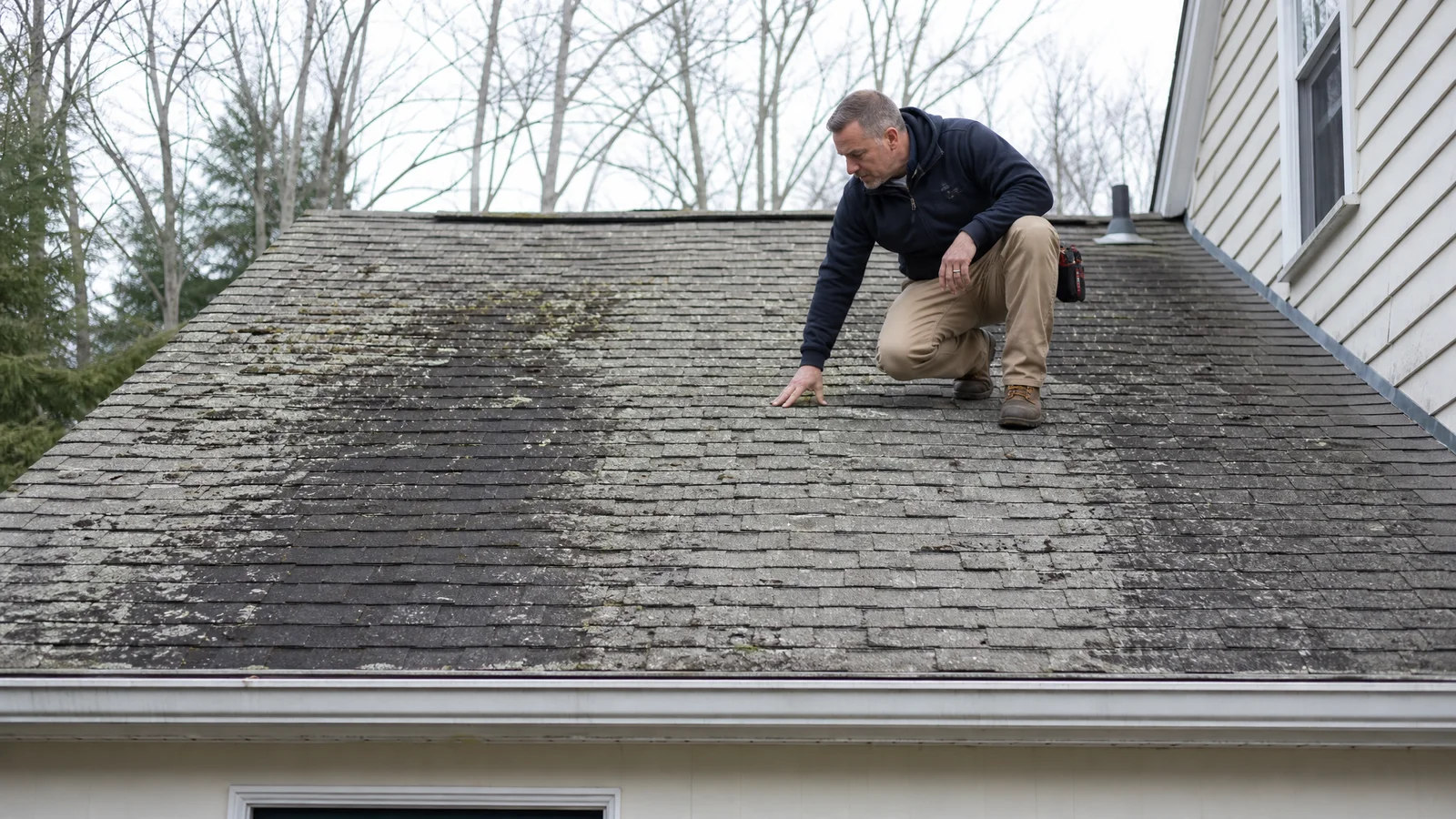
Not every leak means a new roof. A small water stain on the ceiling often triggers unnecessary panic for property owners.
We hear this concern daily from homeowners and business owners trying to decide whether to schedule a simple roof leak repair or replace the entire system.
This decision requires looking past the immediate drip to evaluate the complete health of your roofing materials. Our team relies on a straightforward assessment process to clear up the confusion.
Let’s review the specific data points that separate a basic patch from a full replacement project.
Repair usually wins when…
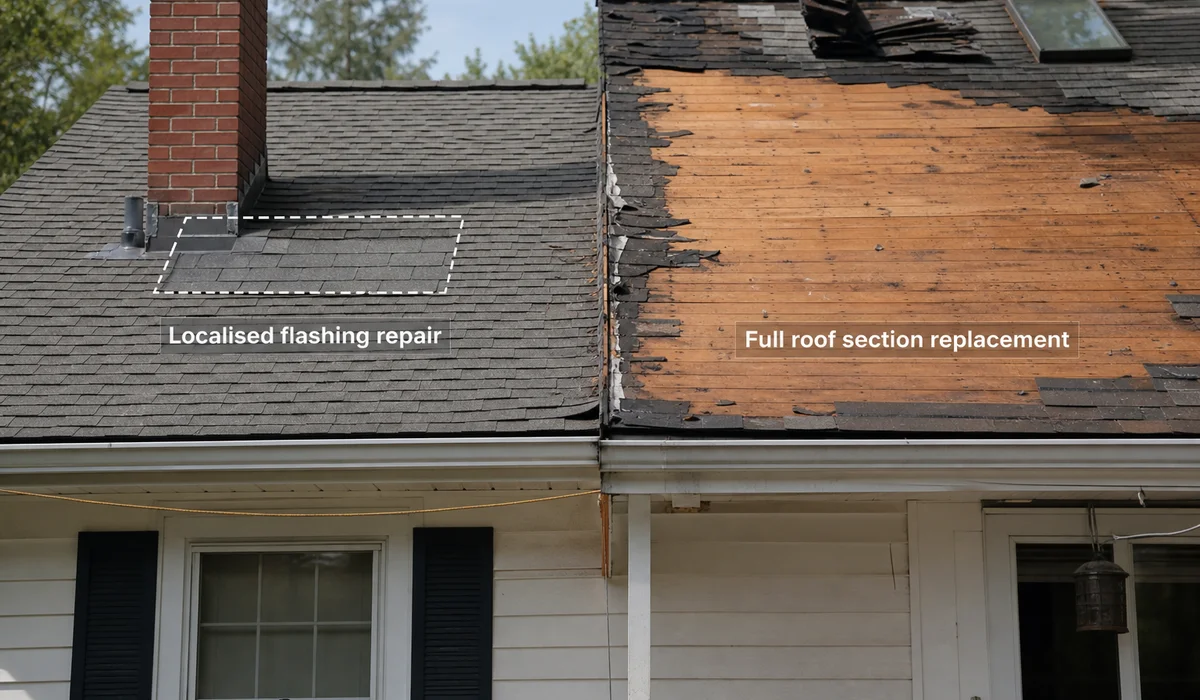
A localized issue on an otherwise healthy roofing system points directly to a repair. Fixing a roof leak or replacing the entire structure depends entirely on the extent of the damage.
We often find that water entry stems from a single failed component rather than widespread material failure. According to 2026 data from industry analysts, the average roof leak repair cost in the US sits between $450 and $1,500.
This price range covers most isolated residential roofing issues. Our technicians frequently trace these leaks back to worn neoprene pipe boot flashings, which are the most common cause of water entry.
Sun exposure cracks these rubber seals long before the surrounding asphalt shingles begin to fail. Here are the specific conditions that make repair the smartest financial choice:
- Leak is isolated to one location (one flashing, one boot, one shingle)
- Roof is under 15 years old
- Decking under the failure is dry and solid
- No other leak calls in the past three years
- Rest of the shingle field shows normal wear
Replacing a cracked pipe boot or a single piece of step flashing is a fast process. We prioritize targeted fixes when the structural integrity of the roof deck remains intact.
See our leak repair service for what a typical repair covers.
Replacement enters the conversation when…
Systemic failures across the roof require a full replacement. Chasing multiple water entry points quickly becomes more expensive than installing a new roof.
We advise clients to stop throwing money at patches when the core materials have reached the end of their design life. Current 2026 pricing for a standard US roof replacement averages between $11,500 and $16,500 for architectural asphalt shingles.
Spending $1,500 every few months on temporary fixes makes little sense when facing these numbers. Our crews look for widespread granule loss that exposes the fiberglass mat, as this indicates the shingles can no longer shed water effectively.
You should consider a full replacement if you notice these warning signs:
- Multiple leaks in different parts of the roof
- Roof is past 20 years old
- Decking is soft or wet in multiple areas
- Repeat leaks even after previous repairs
- Widespread shingle wear (curling, granule loss, missing tabs)
- Insurance companies are pushing back on continued repair claims
Patching a failing system offers a false sense of security. We help property owners calculate the total cost of ownership over a three-year period to clarify this decision.
For a systemic problem, replacing the roof once is always the most economical path.
The three factors that decide it
Three main variables dictate whether you should patch the damage or install new materials. Evaluating these factors provides a clear answer for almost every residential and commercial structure. We rely on this exact framework during every professional inspection.
1. Localization
One leak source usually requires a simple patch. Six different leaks in different roof sections indicate a system at the end of its life. Our inspectors always trace the water path backward to see if the issue stems from a single failed chimney flashing or widespread material breakdown.
2. Decking condition
Dry sheathing under the leak points toward a repair path. Soft, rotted, or wet plywood sheathing puts you firmly in replacement territory. We cannot patch rotten roof decking from above, and replacing multiple sheets of waterlogged Oriented Strand Board (OSB) requires removing large sections of shingles.
3. Age
For a roof under 15 years old, you need a compelling reason not to repair it. Once a roof passes the 20-year mark, you must justify why you are not replacing it. Our team uses the first two factors to decide the best course of action for roofs falling in that middle 15-to-20-year window.
The 30% rule
A repair cost exceeding 30% of a replacement on a 15-year-old roof signals that a new installation is the better investment. This calculation protects your budget from the diminishing returns of constant patching. We use this financial threshold to give homeowners a concrete benchmark for their decision.
According to 2026 material indexes, asphalt shingle costs continue to experience steady inflation. Waiting three years to replace a roof will likely result in a higher baseline price for the exact same materials. Our project managers provide itemized quotes to make these comparisons obvious.
Consider this real-world example for a 17-year-old roof with a $4,500 storm damage repair quote versus a $14,000 replacement quote:
| Action Plan | Immediate Cost | Future Repairs (Estimated) | Total 5-Year Spend |
|---|---|---|---|
| Repair Now, Replace Later | $4,500 (32% of new roof) | $2,000 to $3,000 | $20,500+ (Includes future replacement) |
| Full Replacement Now | $14,000 | $0 | $14,000 |
Choosing the replacement saves money over the long term. We point out that the replacement option also guarantees 25 years of a clean, watertight roof.
Situations where repair still wins on an old roof
Sometimes the strict financial math does not align with your current life situation. Certain scenarios make a targeted patch the smartest tactical move even on an aging structure. We fully support a repair strategy when property owners face these specific circumstances.
- Selling within 12 months. The 2025 Cost vs. Value Report from Zonda shows that a new asphalt roof recoups 59% to 68% of its cost at resale. Sometimes the repair-and-disclose approach keeps more cash in your pocket during a real estate transaction.
- Cash flow constraints. A quality repair buys valuable time if a full replacement is not in the budget this year.
- Insurance timing. A strategic patch now might position a property for a fuller, legitimate claim later if storm damage is involved.
- Specific failure. A targeted repair can work perfectly if the only real problem is a single chimney flashing failure on an otherwise solid 25-year-old roof.
Buying time is a valid strategy when executed with open eyes. Our service technicians will gladly secure your building while you plan for future capital expenditures.
The honest math we run with clients
Transparency is the only way to build trust during a roofing crisis. Presenting all the financial facts allows you to make an empowered choice for your property. We quote both the specific leak repair and a full replacement for every leak call on a roof older than 15 years.
You see both sets of numbers side by side. Our project managers show you the long-term breakdown so you can see the true cost of ownership.
A $14,000 replacement spread across a 25-year lifespan costs just $560 annually. That is significantly less than paying for yearly emergency patches.
Taking the long view removes the anxiety from the process. We want you to feel confident that your investment is actually improving the value and safety of your home.
What to do
Accurate diagnosis is the first step to a permanent solution. Guessing at the source of a water stain often leads to wasted money on ineffective patches. We utilize modern tools like thermal imaging cameras to track moisture beneath the surface during a proper leak detection process.
Get leak detection to find the actual source of the moisture. Request a written estimate for the specific repair and a separate quote for a full replacement. Compare both of these numbers against the current age and expected lifespan of your roof.
Making this decision alone can feel stressful. Request a free assessment and our experts will show you photos, explain your options clearly, and provide both sets of numbers.
Frequently Asked Questions
When does a leak justify a new roof? ▼
When leaks are widespread, the decking is rotted, the roof is near end of life, or repair costs approach 30% of a replacement on a 15+ year old roof.
Is repairing a leak on an old roof worth it? ▼
Sometimes as a stopgap for a specific reason — sale timing, cash flow, insurance timing. But repeated leaks on an old roof almost always favor replacement over time.
How do you decide? ▼
Three factors: how localized the leak source is, the decking condition, and the roof's age relative to its expected lifespan.
Ready to talk to a roofer?
Read about our roof leak detection & repair service or get a free estimate.
Related Guides
Ceiling Water Stains: What They Tell You About Your Roof
A ceiling water stain often means a roof leak. Learn to read stain patterns, trace them to the source, and act before mold sets in.
How Roof Leaks Are Found: Moisture Meters and Thermal Imaging
See how pros trace roof leaks to the true source with moisture meters, thermal imaging, and water testing — instead of guessing and patching.
Missing or Damaged Shingles: What They Mean
Missing or damaged shingles raise leak risk fast. Learn the causes, whether they can be matched, and when they signal a bigger roof problem.
Why Is My Roof Leaking? Common Causes
Roof leaks usually trace to flashing failure, cracked boots, missing shingles, ice dams, or clogged valleys. Learn the top causes for CT homes.