Ceiling Water Stains: What They Tell You About Your Roof
A ceiling water stain often means a roof leak. Learn to read stain patterns, trace them to the source, and act before mold sets in.
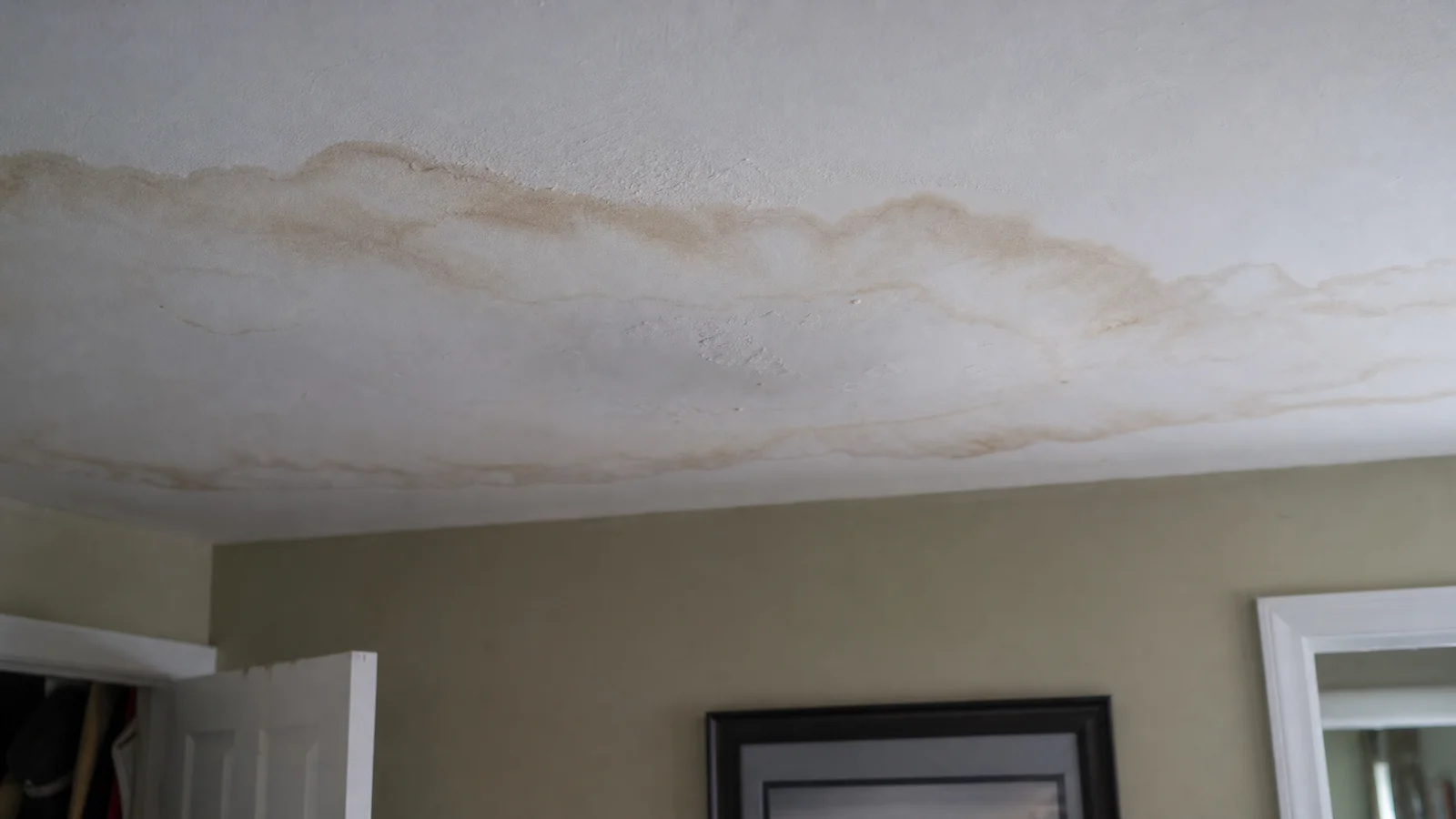
A water stain on ceiling drywall is usually your roof or plumbing sending you a direct message. We investigate ceiling water stains roof leak scenarios constantly during our inspections. That discoloration is actually a tide line of dissolved minerals.
It shows exactly where the water stopped.
Let’s look at the data, what the stain shapes are actually telling us, and explore a few practical ways to respond.
First, is it roof or plumbing?
You can usually tell the difference by watching the weather. A roof leak fluctuates with rain or snowmelt, while a plumbing leak drips constantly regardless of the forecast. We recommend checking the area above the stain first. The US Environmental Protection Agency notes that 10 percent of homes have hidden plumbing leaks, but those act very differently than a weather-driven roofing failure. Our team looks for these specific indicators to tell the two apart.
Roof leak indicators:
- Stain on an upper-floor ceiling with an attic directly above
- Appears or worsens after heavy rain or snowmelt
- Ring shape with a darker outer edge showing repeated wet and dry cycles
- Musty smell in the attic space
- Corresponding damp spot on a nearby exterior wall
Plumbing indicators:
- Stain below a bathroom, kitchen, or laundry room
- Constant slow spread that is not tied to the weather
- Sudden appearance without any recent storm activity
- Bad smell indicating sewer-related pipe failures
If it is plumbing, you need a licensed plumber. If it is the roof, keep reading.
What stain patterns mean
We can read a brown ceiling stain roof indicator like a map. The shape and color reveal exactly how the moisture is behaving inside your drywall.
Common Water Stain Shapes
Small, round, single spot: Point-source drip. Usually, this means one active entry point that has been active for a short time.
Long streak from the ceiling-wall corner: Water tracking down a rafter or interior wall. The entry point is up-slope on the roof.
Ring with darker outer edge, dry center: Recurring leak over multiple weather events. The wet and dry cycle deposits tannins and minerals at the edges.
Sagging or bulging ceiling drywall: Significant water accumulation. You must puncture this safely to release the water, then address it urgently.
Widespread staining across a whole ceiling: Extensive leak. This is likely from failed flashing over a chimney, a major penetration, or a severe ice dam.
Experts look closely at the color of the stain. A rust-colored ring often means the water is pulling iron oxide from roofing nails or pipe straps. A light yellow ring typically indicates a slower drip that is pulling tannins from the wood framing. Our professionals use these clues to narrow down the exact structural problem.
Where the entry point actually is
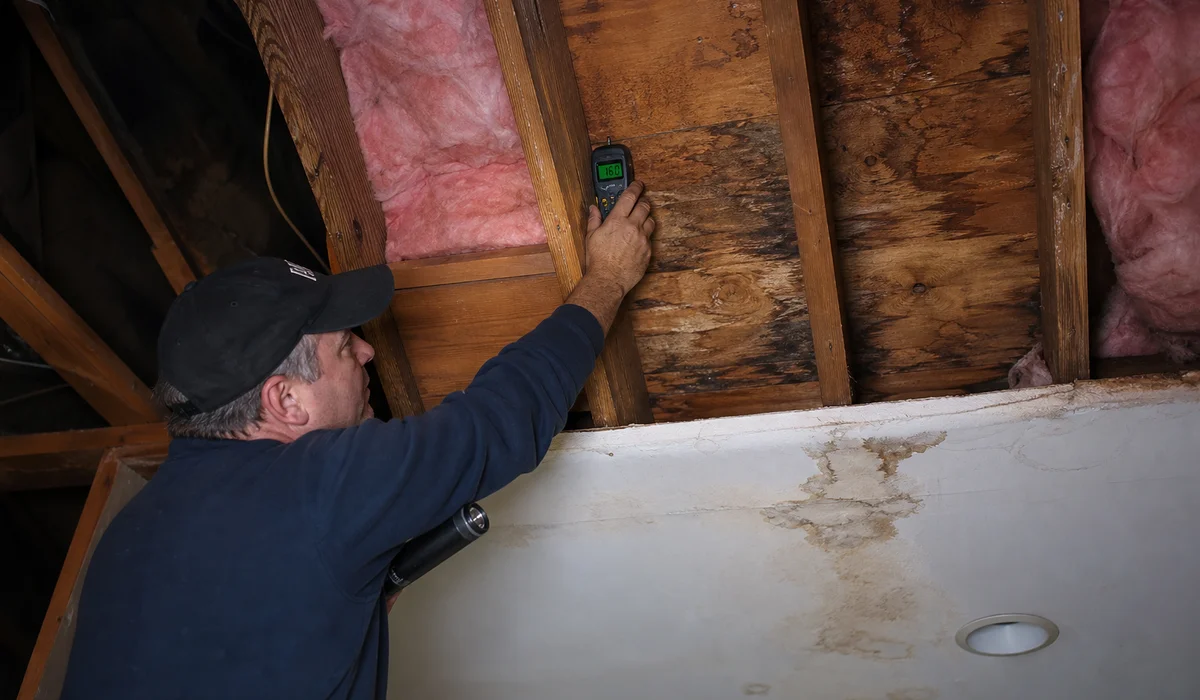
Water tracks along the roof deck and rafters before finally dropping out onto the drywall below. The ceiling stain is the exit, not the entry. Our experience shows that the actual hole in your shingles is almost always located somewhere else entirely.
Entry points are typically found in these specific areas:
- Up-slope from the stain because water runs down the pitch
- Near the closest chimney, exterior wall, skylight, or roof penetration
- Surprisingly far from the visible drop due to water traveling along exhaust pipes
Professional leak detection traces the path from the stain back to the source rather than guessing. We rely on specialized equipment to find the exact leak location. Tools like the FLIR MR176 thermal imaging camera allow inspectors to see temperature drops caused by hidden moisture. Pinless moisture meters, like the Tramex ME5, can scan large sections of drywall without causing destructive damage to your ceiling.
The mold clock
Time is your biggest enemy after a water intrusion. The US Centers for Disease Control and Prevention states that mold can begin growing on damp organic surfaces within 24 to 48 hours. Our restoration crews work quickly because missing this timeframe changes a simple drying job into a hazardous remediation project.
The Mold Growth Timeline
| Timeframe | Status & Required Action |
|---|---|
| Days 1 to 3 | Wet materials but no mold yet. Immediate water extraction is required. |
| Days 3 to 7 | Mold spores begin colonizing damp organic surfaces. Professional help is usually needed. |
| Days 7 to 14 | Visible mold growth is possible. Comprehensive remediation is required. |
| Weeks 2+ | Established mold that requires heavy remediation, not just surface cleanup. |
Property owners must understand the rising costs of delayed action. We always warn clients that once mold is involved, the repair bill multiplies rapidly. You are then paying for the actual roof repair, professional mold remediation, and complete drywall replacement.
What to do this week
You must act decisively to stop the water flow and dry the area to protect your property. The Federal Emergency Management Agency advises that thoroughly drying out your home is the most important step for preventing secondary damage. We advise taking these immediate steps to mitigate the problem.
Immediate Action Plan
1. Stop water intrusion. Use buckets, towels, and heavy-duty plastic tarps. If the ceiling drywall is bulging, safely puncture it with a screwdriver to release the pooling water and prevent a collapse.
2. Photograph everything. Document the damage for your insurance claim and for your personal records before you start moving items.
3. Get up in the attic. Look for wet fiberglass insulation, damp wooden rafters, or a visible water source.
4. Call for leak detection. Do not settle for a temporary patch job. Demand actual source tracing from a qualified professional.
5. Dry out the affected area. Use high-capacity fans or a dehumidifier once the leak completely stops.
6. Repair or replace damaged drywall. Wait until everything is fully dry before attempting any cosmetic fixes or painting.
Safety should always come first. Our contractors recommend wearing an N-95 respirator if you are inspecting damp areas with visible mold growth.
When ceiling stains signal replacement
If you are dealing with a ceiling water stains roof leak across multiple rooms on a roof over 20 years old, that is not a localized issue. That is a systemic roof failure at the end of its lifespan. Repeated leak calls just chase the symptoms while ignoring the disease. We suggest looking at the underlying math of the situation before spending more on temporary patches.
According to 2026 industry data, a standard asphalt shingle roof replacement costs between $9,500 and $15,000 for an average home in the US. See our repair vs replacement guide for the honest financial breakdown.
Our team provides comprehensive assessments to help you make the right choice. For active stains and leaks, see our leak repair service or call now.
Frequently Asked Questions
Does a stain always mean a roof leak? ▼
Usually roof or plumbing. If the stain is on a ceiling below a bathroom or kitchen, plumbing is a strong contender. If it's below the attic or upper floor, roof is more likely.
How fast should I act? ▼
Within days if possible. Trapped moisture leads to mold within a couple of weeks and decking rot within a season.
Can I paint over a small stain? ▼
Only after the leak is fixed. Painting over an active leak just delays the problem — the stain will come back and be worse.
Ready to talk to a roofer?
Read about our roof leak detection & repair service or get a free estimate.
Related Guides
How Roof Leaks Are Found: Moisture Meters and Thermal Imaging
See how pros trace roof leaks to the true source with moisture meters, thermal imaging, and water testing — instead of guessing and patching.
Missing or Damaged Shingles: What They Mean
Missing or damaged shingles raise leak risk fast. Learn the causes, whether they can be matched, and when they signal a bigger roof problem.
Roof Leak Repair vs. Replacement: When a Leak Means a New Roof
When does a roof leak mean a full replacement? Compare isolated vs. systemic leaks, decking damage, and roof age to make the right call.
Why Is My Roof Leaking? Common Causes
Roof leaks usually trace to flashing failure, cracked boots, missing shingles, ice dams, or clogged valleys. Learn the top causes for CT homes.