EPDM vs. TPO Flat Roof Membranes
Compare EPDM and TPO flat roof membranes on durability, cost, energy performance, and lifespan to pick the right system for your building.
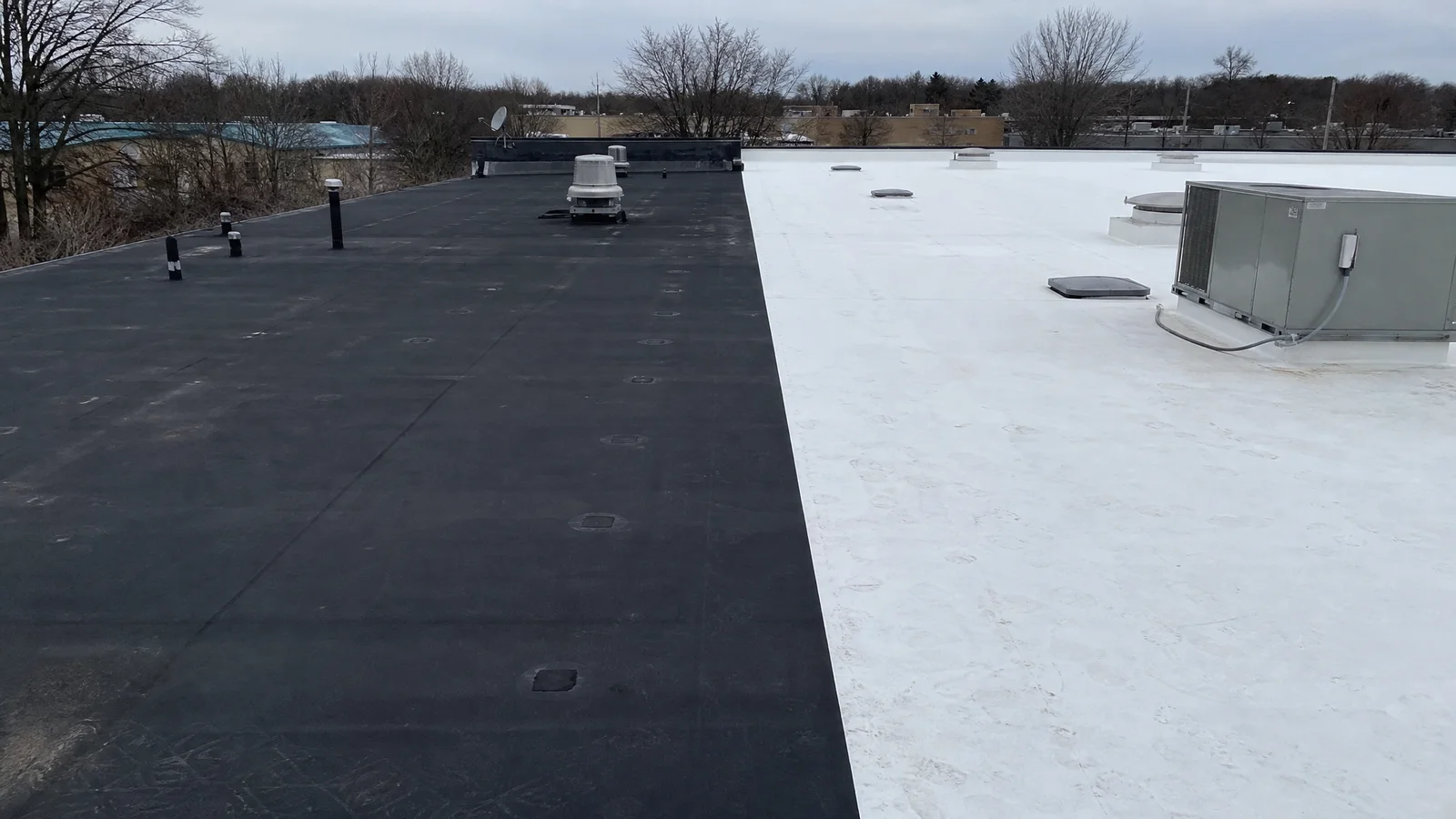
We often see commercial property owners in Connecticut agonizing over the epdm vs tpo decision for their flat roofs.
The debate usually centers on upfront costs versus long-term energy savings. Both materials are strong contenders for the best flat roof membrane, which is why they dominate small commercial flat roofing.
Here is the honest comparison for CT buildings. The performance data tells a clear story about which material belongs on your specific property.
EPDM (Ethylene Propylene Diene Monomer)
EPDM is a synthetic rubber membrane that has protected commercial flat roofs for over 50 years. This black, highly flexible material remains one of the most reliable options on the market.
Our crews install a lot of this product because it flat-out works. Major manufacturers like Carlisle SynTec have well-documented track records, having produced over 20 billion square feet of EPDM.
The synthetic rubber composition gives the membrane incredible elasticity. This flexibility prevents cracking during brutal New England winters.
Advantages:
- Long proven track record: The material has been tested in real-world conditions since the 1960s.
- Extreme temperature tolerance: Premium sheets withstand temperature swings from -40°F up to 300°F.
- Excellent flexibility: Rubber stretches to accommodate building settling and seasonal structural movement.
- Straightforward repairs: Patching requires simple adhesive rather than specialized welding equipment.
- Fewer joint failures: The material handles cold and heat cycling exceptionally well over decades.
Disadvantages:
- Heat absorption: The standard black color absorbs summer heat, which can make attics and top-floor interiors warmer.
- Seam degradation: Adhesive-based seams slowly break down over 15 to 20 years and require maintenance.
- Lower energy performance: EPDM lacks the reflective properties required by some modern energy codes.
- Shrinkage: The membrane can shrink slightly over time, pulling at the perimeter flashings.
Let’s summarize the baseline numbers for a standard 45-mil or 60-mil installation in 2026.
| EPDM Specification | Average Detail |
|---|---|
| Typical Lifespan | 20 to 30 years |
| Installed Cost (2026) | $5 to $9 per sq ft |
| Primary Material | Synthetic Rubber |
| Seam Type | Glued / Adhesive Tape |
TPO (Thermoplastic Polyolefin)
TPO is a single-ply thermoplastic membrane known for its bright white, energy-reflecting surface. This material entered the commercial roofing market in the 1990s and has quickly become the go-to standard for energy efficiency.
We recommend TPO when evaluating a tpo vs epdm roof for projects where cooling costs and code compliance are the top priorities. The material features a Solar Reflectance Index (SRI) that often exceeds 100.
This rating easily clears the strict requirements set by the 2021 and 2024 IECC energy codes.
Advantages:
- High UV reflection: The bright white surface lowers interior cooling costs during hot summer months.
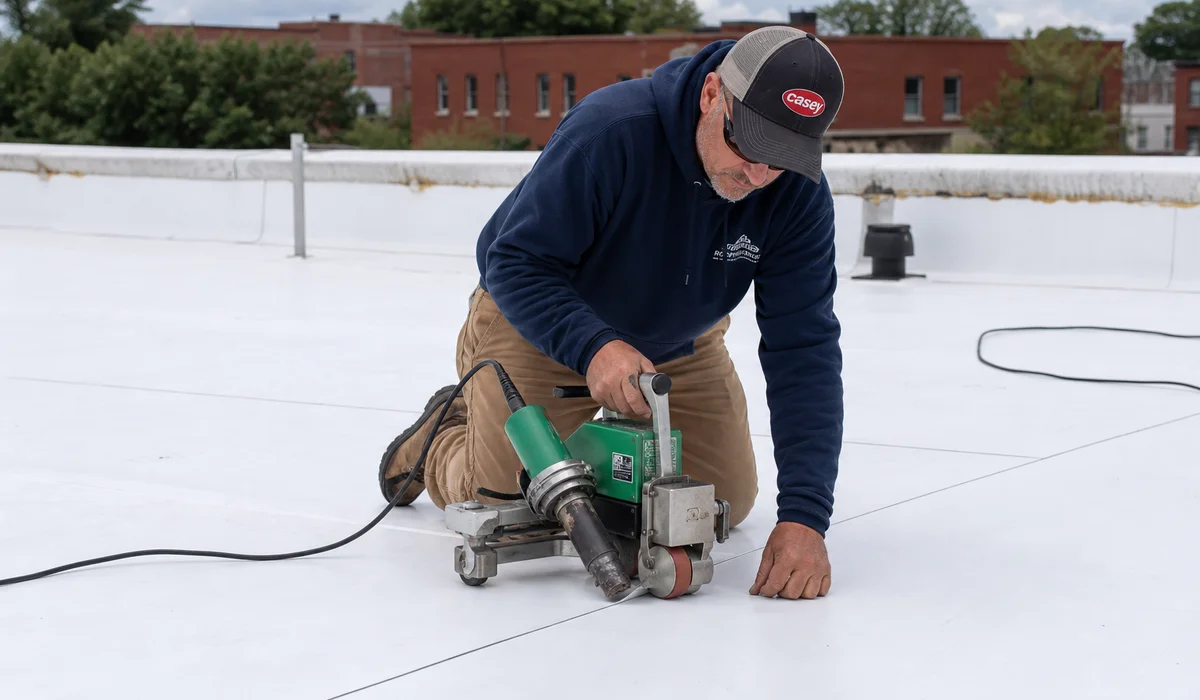
- Superior seam strength: Hot-air welded seams create a bonded joint that is physically stronger than glued EPDM seams.
- Energy code compliance: Standard TPO easily meets strict local requirements for cool roof installations.
- Clean aesthetic: The smooth, white finish provides a much cleaner look for highly visible rooftops.
- Improving track record: Major brands like GAF EverGuard continue to refine their chemical formulations for better longevity.
Disadvantages:
- Shorter historical data: The material lacks the 50-year track record of traditional rubber roofing.
- Formulation variations: Older TPO from certain manufacturers aged poorly, creating some hesitation in the market.
- Complex repairs: Fixing a puncture requires specialized hot-air welding equipment and an experienced technician.
- Cold weather cracking: Poor quality formulations can become brittle and crack during extreme cold snaps.
These are the current averages for standard commercial TPO installations in our region.
| TPO Specification | Average Detail |
|---|---|
| Typical Lifespan | 15 to 25 years |
| Installed Cost (2026) | $6 to $10 per sq ft |
| Primary Material | Plastic/Rubber Blend |
| Seam Type | Heat-Welded |
When EPDM wins
Rubber roofing is often the smartest choice for buildings dealing with significant structural movement or severe winter freezing. We strongly suggest sticking with EPDM if you are only replacing a section of an existing rubber roof.
Patching new materials into an old system rarely yields good results. Consider installing EPDM under the following conditions:
- Matching an existing system: Keeping the same material simplifies maintenance and reduces compatibility issues at the seams.
- High structural movement: Settling foundations and seasonal expansion require a highly elastic material to prevent tearing.
- Cost-sensitive budgets: Standard 45-mil rubber sheets typically cost slightly less per square foot than premium thermoplastics.
- Northern climate zones: EPDM handles freeze-thaw cycles beautifully, making it ideal for Connecticut winters where summer UV reflection is less critical.
- Older properties: The flexible nature of rubber handles the thermal shock of aging building materials very well.
When TPO wins
Thermoplastic membranes shine when energy efficiency and seam strength are the primary goals. Our project managers frequently specify TPO for full tear-offs on properties with heavy rooftop equipment.
The heat-welded seams hold up exceptionally well to the exhaust and vibrations from commercial HVAC units. TPO is generally the better option in these scenarios:
- Strict energy codes: Reflective white membranes generate immediate credit toward IECC compliance for commercial structures.
- High cooling loads: Buildings with significant summer air conditioning demands benefit greatly from the UV-reflecting surface.
- New construction: A full tear-off or brand-new build allows you to start fresh with a modern, energy-efficient system.
- Visible rooftops: The clean, bright white finish looks highly professional from neighboring upper-story windows.
- Complex HVAC layouts: Hot-air welding creates incredibly strong, customized seals around vents, pipes, and heavy air conditioning units.
What we recommend for CT small commercial
Honestly, either membrane works fine for most small commercial buildings in the Newington area. We have installed hundreds of both systems successfully across Hartford County.
The final decision usually comes down to three practical factors rather than a strict difference in material quality. Here is how you should evaluate your specific property:
- Matching your existing system: Sticking with rubber is the safest bet if you are just patching or doing a partial replacement on an older EPDM roof.
- Energy codes and rebates: Check to see if your building qualifies for local utility rebates through programs like Energize CT. Reflective TPO roofs often unlock financial incentives that offset the slightly higher installation price.
- Roofer expertise: The installation quality matters far more than the material choice itself. We always tell clients to pick a contractor based on their specific daily experience. A crew installing rubber every single day will deliver a better EPDM roof than a team that only occasionally heat-welds TPO.
Other options (briefly)
While rubber and thermoplastic dominate the market, a few other materials still play a role in commercial roofing. We occasionally recommend these secondary options for buildings with very specific operational needs.
- PVC (Polyvinyl Chloride): This material looks similar to TPO but features a different chemical makeup. PVC offers excellent resistance to grease and chemicals, making it the top choice for restaurants with heavy exhaust hoods. Expect to pay a premium of $7 to $12 per square foot for this durability.
- Modified Bitumen (Torch-Down): This older, multi-layer technology remains highly resistant to foot traffic. The installation carries a higher risk because it requires open torches on the roof. Most modified bitumen systems last 15 to 20 years before requiring replacement.
- Built-Up Roofing (BUR): This old-school system relies on multiple layers of tar and gravel. BUR provides incredible puncture resistance, but the extreme weight and messy installation have caused it to be largely replaced by lighter single-ply membranes.
Bottom line
For most small commercial flat roofs in Hartford County, EPDM and TPO both perform exceptionally well. The actual installation quality always matters far more than your specific material choice.
Proper seam welding, penetration flashing, and edge details dictate how long your system will survive.
We want to make sure you get the exact right fit for your property. If you are planning a new project, check out our flat roof service for more details. You can also request an estimate directly, and our team will walk you through the best options for your building.
Frequently Asked Questions
Is TPO better than EPDM? ▼
Neither is universally better. TPO reflects heat and has welded seams. EPDM is proven, flexible, and forgiving of building movement. It depends on the building, use, and climate.
Which lasts longer? ▼
Both can exceed 20 years when properly installed and maintained. TPO manufacturers have improved formulations over time; EPDM has a longer track record.
Which is cheaper? ▼
Historically EPDM was noticeably cheaper. The gap has narrowed. Today they're often within 10–15% of each other for the same-quality install.
Ready to talk to a roofer?
Read about our flat roof repair (commercial) service or get a free estimate.
Related Guides
Common Flat Roof Problems on Small Commercial Buildings
Ponding water, failed seams, punctures, and flashing failures are the top flat roof problems on small commercial buildings. Learn what to watch for.
Flat Roof Repair vs. Replacement for Property Managers
Repair or replace your commercial flat roof? Weigh age, condition, budget, tenant downtime, and warranty to make the right call for your property.