Emergency Roof Tarping: When It's Needed
Learn when emergency roof tarping is warranted, what it protects, and how fast we respond across Newington and Hartford County to stop water damage.
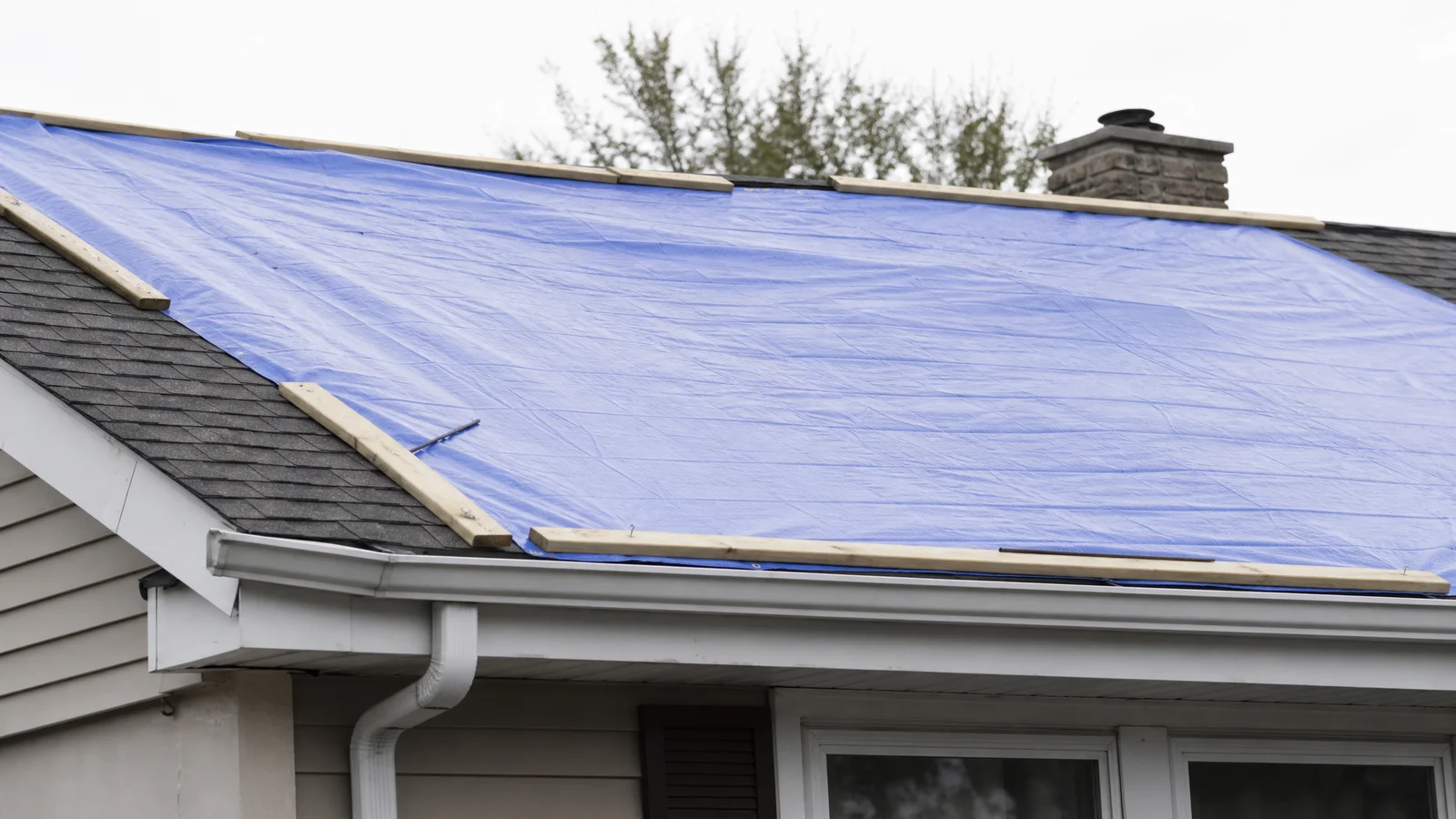
From what we have seen on the ground, the difference between a minor repair and a total structural loss often comes down to the first 24 hours. A fast emergency roof tarping response stops water from destroying your interior.
The Insurance Information Institute recently reported that roof-related issues make up 39% of all homeowners insurance claims in the US.
That single statistic proves how vulnerable the top of your house really is. We will break down exactly how to identify a true weather emergency, explain what materials work best, and outline the correct installation methods. You will know exactly when to call for a temporary cover and when to wait for a permanent fix.
When tarping is warranted
Tarping is warranted immediately when your roof has active water intrusion, exposed decking from missing shingles, or structural breaches from tree strikes. This temporary barrier stops the bleeding until permanent repairs begin.
Our crews witness daily how the first 24 hours after a storm dictate the final repair bill. Taking fast action is your best defense against severe secondary water damage.
The National Oceanic and Atmospheric Administration (NOAA) tracks billion-dollar weather events across the country. Their early 2026 data shows severe storms are hitting harder and faster, meaning you must know exactly when to call for immediate cover.
Active water intrusion
Water dripping through a ceiling or pooling in an attic is an absolute emergency. We prioritize these calls because active indoor moisture ruins drywall in hours. Stopping the flow at the source is the only way to save your interior finishes.
Missing sections of roof
High winds easily rip away older asphalt shingles. This exposes the vulnerable wood decking underneath to the elements. Standard HO-3 insurance policies require you to mitigate further damage in these exact scenarios.
Tree strike
A heavy tree limb hitting your house compromises the entire structural frame. Our technicians know that even if no visible hole exists from the ground, the underlying decking is likely cracked. Securing a temporary cover keeps the area dry while an engineer assesses the damage.
Storm damage with more weather incoming
Getting hit by high winds on Tuesday often means a heavy rainstorm on Thursday will find every weak spot. We install emergency covers to bridge the gap between back-to-back weather fronts. This stops a secondary storm from turning a minor repair into a major disaster.
Structural risk
Sagging decks, broken rafters, and visible holes demand immediate attention. Even if the sky is clear today, you cannot leave the inside of your house exposed. Putting up a heavy-duty cover buys you time to schedule a full structural rebuild.
When tarping isn’t needed
You can skip the tarp if the damage is purely cosmetic, like a single missing tab during dry weather, or if the leak is a slow drip that a same-day repair can fix. Deploying emergency covers in these scenarios often costs more time and money than simply completing the permanent fix.
We always evaluate the local US weather forecast before recommending a temporary cover. If a fast, same-day patch is possible, that is usually the smarter and cheaper path.
Here are the most common situations where a temporary cover is unnecessary:
- Small isolated leaks that can be repaired the same day.
- Cosmetic damage without water intrusion, such as a missing shingle tab in dry weather.
- A very slow drip you can easily catch in a bucket, provided no rain is forecast for several days.
- Minor damage from a localized storm that a crew can permanently repair within 48 hours.
| Scenario | Action Required | Average Cost Impact |
|---|---|---|
| Single missing shingle (Dry forecast) | Direct same-day patch | $150 - $300 |
| Large exposed deck (Rain incoming) | Emergency tarp deployment | $400 - $1,000+ |
What tarping protects
A properly installed temporary cover protects your home’s interior drywall, framing, and insulation from saturation while securing your insurance standing. Stopping water at the roofline prevents secondary issues like rapid mold growth and structural wood rot.
Our team emphasizes that an emergency cover is primarily a financial shield. Standard insurance policies mandate that property owners take reasonable steps to prevent further damage after an initial loss.
Fulfilling this mitigation requirement protects your claim status. If you fail to cover a hole and a second rainstorm ruins your hardwood floors, the insurance adjuster may deny that portion of the claim.
A secure cover effectively protects:
- Interior finishes, including drywall, hardwood floors, and valuable furniture.
- Attic insulation, which loses all thermal R-value the moment it becomes saturated.
- Wooden structural framing from prolonged moisture exposure and eventual rot.
- Personal contents stored in the attic from direct water damage and mold spores.
- Your homeowner’s insurance position by fulfilling the strict damage mitigation clause.
What tarping doesn’t fix
An emergency roof tarp does not repair underlying structural damage, nor will it reverse interior water damage that has already occurred. It is strictly a short-term shield, not a permanent structural solution.
We tell every customer that a plastic cover has a strict expiration date. A properly installed heavy-duty commercial cover lasts about 30 to 90 days, depending on UV exposure and local weather conditions.
“A temporary cover is a critical stopgap measure that buys you time, but it is never a replacement for a proper structural repair.”
You must act quickly to schedule the real fix. A temporary cover will never fix:
- Underlying severe damage to the wooden roof structure or trusses.
- Interior ceiling or wall damage that occurred during the initial storm impact.
- Long-term weather protection needs lasting several months or years.
- Aesthetic or cosmetic concerns regarding your home’s curb appeal.
How proper tarping is done
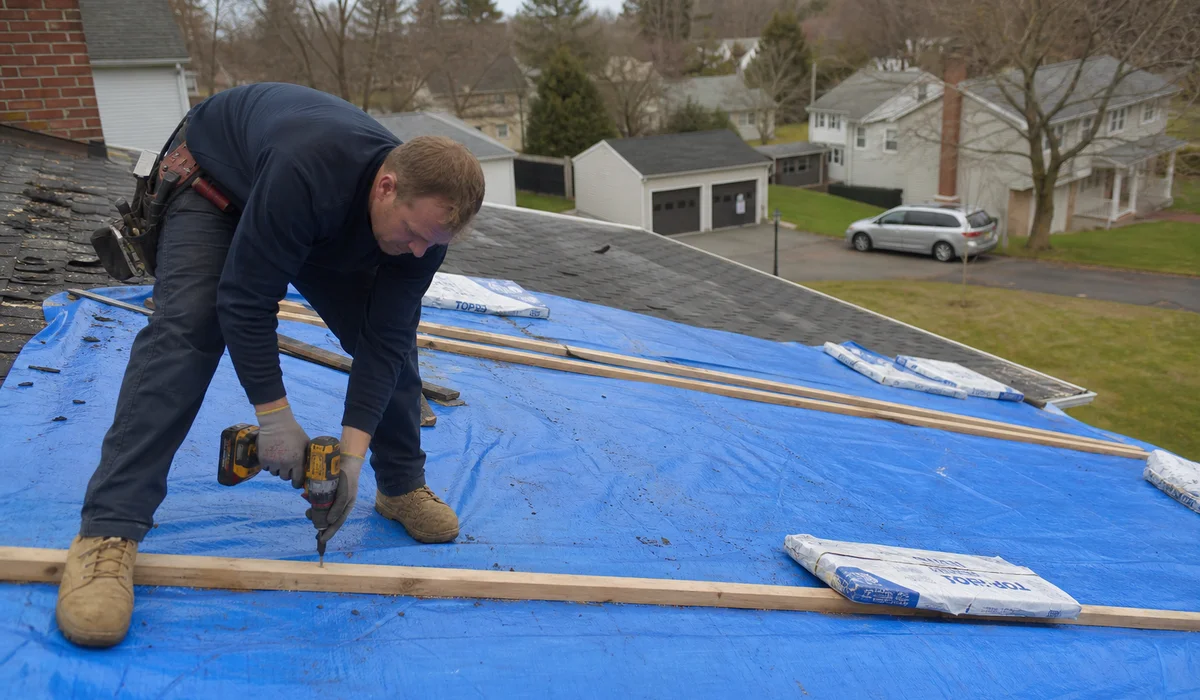
Proper emergency tarping requires securing a heavy-duty polyethylene sheet with wooden battens, ensuring a tight seal that overlaps onto undamaged roofing. Professional crews never just throw a thin plastic sheet over a hole and hold it down with heavy bricks.
Federal emergency standards provide strict guidelines for temporary roof covers. FEMA specifications dictate that the material must overlap the damaged area by at least three to four feet in all directions.
This generous overlap allows water to run safely over the edges instead of seeping underneath. Calling a professional roof tarp service guarantees you get specific materials and methods to survive high wind gusts.
Heavy-duty materials
We use 8-mil to 12-mil thick polyethylene materials for all emergency jobs. This commercial-grade thickness resists tearing and blocks harmful UV rays that degrade thinner plastics.
Secure batten fastening
Wooden strips, called battens, are essential for a tight fit. Installers nail or screw these thin boards directly through the plastic and into the sound decking around the perimeter. This method holds the material flat and prevents wind uplift.
Correct overlap technique
Water obeys gravity. That means the top edge of the cover must extend several feet up the slope onto undamaged, secure shingles. Water then flows seamlessly down the slope, over the plastic, and off the eaves.
Interior signal path
Anything located directly under the compromised zone should be moved or covered inside the house. A heavy-duty cover acts as the primary barrier, but driving winds can sometimes force tiny amounts of moisture past the edges during severe hurricanes.
Response time
For Newington and immediately surrounding US towns, we aim for a same-day response, often arriving within a few hours during normal business hours. After-hours and overnight calls are strictly prioritized by severity, tackling active interior water intrusion first.
Our dispatch personnel understand the panic of a midnight ceiling leak. The schedule prioritizes active emergencies to ensure the most critical situations receive immediate attention.
See our emergency roof repair service for exactly what a full 24/7 emergency roof tarping response covers.
For active, dangerous damage happening right now, call now.
Frequently Asked Questions
How long does a tarp last? ▼
A properly installed tarp with battens holds for weeks — enough time to complete a permanent repair or replacement. Not a long-term solution but reliably weather-tight in the short term.
How fast can you tarp my roof? ▼
Usually same-day across Hartford County for active leaks. Emergency response is 24/7.
Does insurance cover emergency tarping? ▼
Yes, in most cases. Emergency tarping is considered mitigation — you're required by your policy to prevent further damage. Save the receipt, and it's reimbursable.
Ready to talk to a roofer?
Read about our storm damage roof repair service or get a free estimate.
Related Guides
How to Document Roof Storm Damage for a Claim
Build a strong roof insurance claim: a photo and video checklist, dating the damage, keeping receipts, and getting a professional inspection report.
Roof Insurance Claims in Connecticut: How They Work
Understand the Connecticut roof insurance claim process: steps, coverage basics, deductibles, and ACV vs. replacement cost — explained simply.
What to Do Immediately After Roof Storm Damage
Roof hit by a storm? Follow these urgent steps: stay safe, tarp the leak, photograph damage, and call a roofer and insurer before water spreads.
Working With an Insurance Adjuster on Roof Damage
Know what to expect from the adjuster visit: contractor–adjuster coordination, disputed scope, and supplements — so your CT roof claim is paid fairly.