What Roof Flashing Is and Why It Leaks
Flashing seals the vulnerable joints where roofs meet walls, chimneys, and valleys. Learn what it is, why it fails, and why it's a top leak source.
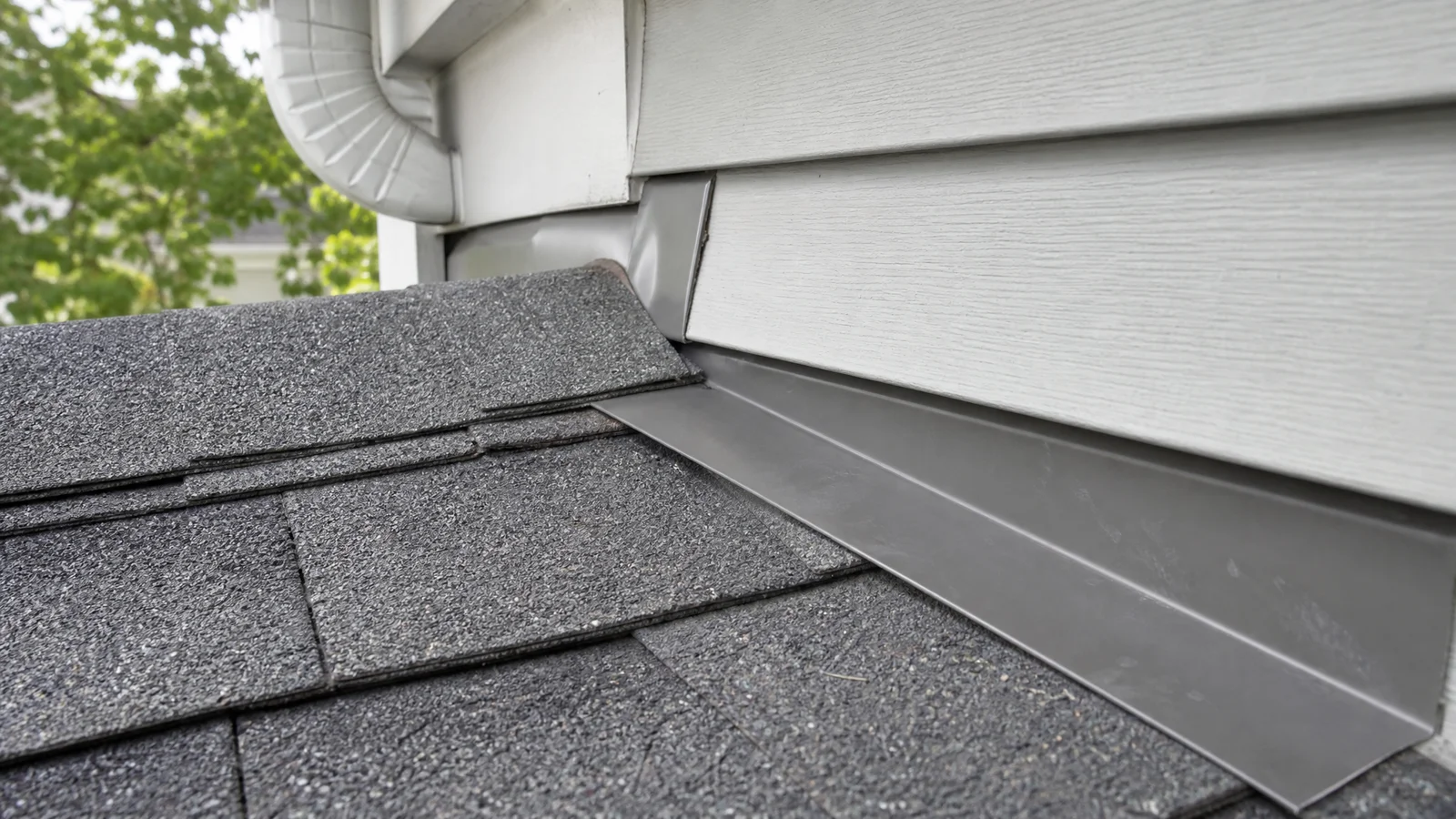
We see hundreds of ceiling stains every year, and most homeowners immediately blame their shingles.
If you are wondering what is roof flashing, it is the thin strip of metal hiding underneath that actually causes the problem.
Our team knows that fixing this hidden layer is the true secret to keeping your property dry. This small detail separates the standard roofs from the ones that actually last. Let’s look at the data to see why these leaks happen and explore practical ways to respond.
What flashing is
We install metal flashing at every joint where your roof meets a chimney, wall, skylight, or another roof plane.
This material, usually aluminum, copper, or lead, seals those transitions against water while allowing for normal expansion and contraction. When you need roof flashing explained simply, just think of it as the ultimate waterproof bridge between your shingles and your exterior walls.
The 2024 International Residential Code (IRC) actually requires this metal to be at least 26-gauge in thickness. Our installers always verify this 0.019-inch thickness to guarantee maximum corrosion resistance. Using the right thickness prevents early rust and structural failure.
Types you will see on a typical US roof:
- Step flashing: L-shaped pieces that step up each shingle course along a wall or chimney.
- Counter flashing: Cover pieces that overlap step flashing, sealed directly into the wall or masonry.
- Apron flashing: A base piece at the bottom of a chimney or dormer where the roof meets a vertical wall.
- Valley flashing: Metal running down the seams where two roof planes meet.
- Drip edge: Metal along the rakes and eaves that directs water off the roof. IRC Section R905.2.8.5 explicitly mandates this piece to stop wind uplift.
- Kick-out flashing: The small piece at the bottom of a step-flashed wall that safely kicks water into the gutter.
Why flashing leaks first
We always tell clients that flashing acts as the transition between two completely different building systems.
Every single transition is a natural vulnerability. The National Roofing Contractors Association (NRCA) reports that 33% of homeowners deal with leaks or minor roof issues, and these transition joints are the primary culprits.
Our crews see the same flashing leak causes on almost every job site. These weak points fail for very specific reasons:
- Thermal movement: Metal expands and contracts at vastly different rates than shingles and masonry. Copper expands about seven times more than silicone per degree Celsius.
- Dried sealants: Old caulk and roofing cement dry out and crack under heavy UV exposure.
- Backed-out fasteners: Nails slowly pull out of the wood decking over time as temperatures fluctuate.
- Rust and corrosion: Older galvanized metal weakens and degrades when exposed to pooling water.
- Sloppy original work: Short overlaps and bad step patterns never improve with age.
The four failure modes
We categorize flashing damage into four main failure modes.
These structural breakdowns happen to almost every property eventually. Catching them early is the key to preventing major interior damage.
1. Rust. Older installations often rely on galvanized steel. This material typically lasts 15 to 40 years before rusting through, and water easily finds these new holes.
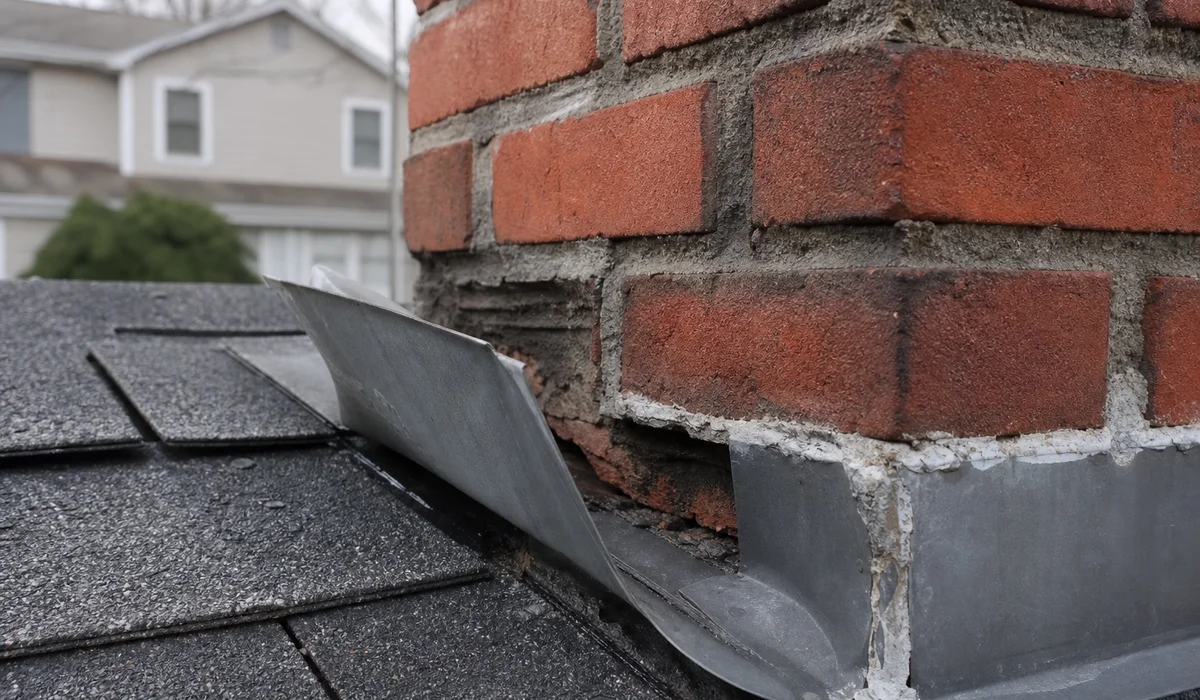
2. Lift. High winds, ice dams, or house settling will physically lift the metal off the roof surface. Water immediately gets under the barrier.
3. Sealant failure. Polyurethane or silicone caulks dry out, crack, and separate from the metal joints. Wide gaps open up quickly after just a few hot summers.
4. Poor installation. Step flashing that fails to step properly is a classic rookie mistake. Counter flashing glued with caulk instead of being physically embedded into mortar joints will fail early because it was never done right.
Why sealant isn’t a fix
We constantly see contractors squeeze a bead of caulk over a failing joint, but this is only a temporary patch.
Polyurethane and silicone sealants dry out and crack under heavy UV exposure, allowing water right back in. This cheap trick might buy you a season or two of dry ceilings.
Our repair strategy avoids this trap entirely.
”Applying silicone directly over copper is especially disastrous since the silicone cannot bond with the rapidly expanding metal.”
The caulk inevitably fails, and the leak returns even worse because the underlying metal has continued to degrade. Proper repair means removing the failed metal, cleaning the substrate, and installing fresh materials with proper detail.
We use caulk as a supplemental moisture barrier, never as the primary fix.
When flashing needs to be replaced
We recommend full replacement when the metal shows visible rust, has pulled away from the roof, or causes repeated leaks.
Catching these warning signs early will save you thousands of dollars in water damage restoration. The U.S. General Services Administration notes that metal performs fine as long as there are no splits, tears, or heavy corrosion.
Our roofing experts replace materials immediately once those structural flaws appear. Here is a quick guide to help you decide your next step.
| Condition | Recommended Action | Why It Matters |
|---|---|---|
| Visible rust or holes | Full Replacement | Galvanized metal has lost its structural integrity. |
| Lifted or pulled away | Full Replacement | Fasteners have failed and metal is permanently warped. |
| Repeated leaks in same area | Full Replacement | Previous caulk patches are hiding a deeper installation flaw. |
| Minor lifted edge (no damage) | Simple Repair | Roofing sealant can safely re-secure a healthy metal edge. |
| Full roof tear-off | Full Replacement | Always install fresh metal to match the new 30-year shingles. |
Choosing the right path forward keeps your property safe.
We also strongly advise replacing materials that are simply wrong for the location. Using standard galvanized steel in a corrosive coastal environment is a guaranteed recipe for premature failure.
Where flashing usually fails first
We inspect the chimney base, roof-to-wall junctions, and skylight perimeters before looking anywhere else.
These specific areas handle the highest volume of water runoff and structural stress. The chimney base is easily the most complex intersection on a residential roof.
Our inspections routinely uncover failures here because it requires four separate components working together perfectly. A missing step, apron, counter, or cricket piece will compromise the entire system.
Look out for early deterioration in these key spots:
- Chimney base: Step and counter components fail often, especially without a protective roof saddle or cricket.
- Roof-to-wall junctions: Dormers and additions shift slightly, tearing the metal.
- Skylight perimeters: Factory seals degrade quickly under harsh UV exposure.
- Valleys: Old-style closed-cut designs wear through much faster than open metal valleys.
- Kick-out corners: Missing kick-outs pour concentrated water directly into your exterior wall cavity.
The good news
We can usually resolve most of these failures with a simple, same-day repair. Modern 2026 industry data shows that standard fixes typically average between $200 and $600. Even a complex chimney job done correctly is typically a full-day project ranging from $800 to $1,500 depending on the chimney size and condition.
Our crews handle this by removing the old material, installing a new step and counter system, and cutting a fresh mortar reglet. Understanding what is roof flashing and how to maintain it prevents you from paying over $10,000 for a completely new roof prematurely.
See our flashing and chimney repair service to learn more. You can also request a leak assessment to get a professional diagnosis.
Frequently Asked Questions
Why does flashing fail? ▼
Age, rust, poor installation, and dried sealant open gaps that let water in. Most flashing failures show up between 15 and 25 years after install.
Is caulk enough to fix flashing? ▼
Sealant is temporary — usually a season, maybe two. Proper metal flashing repair (remove failed, install new) is the lasting fix. If your last roofer used a bead of caulk, expect the leak to return.
What's the difference between step and counter flashing? ▼
Step flashing sits under each shingle course and turns up against a wall or chimney. Counter flashing overlaps the step flashing from above, sealed into mortar or siding. You need both for a leak-free joint.
Ready to talk to a roofer?
Read about our flashing & chimney repair service or get a free estimate.