Signs Your Gutters Are Hurting Your Roof
Sagging gutters, overflow stains, and granules in the gutters mean your drainage is failing and your roof edge is at risk. Learn the warning signs.
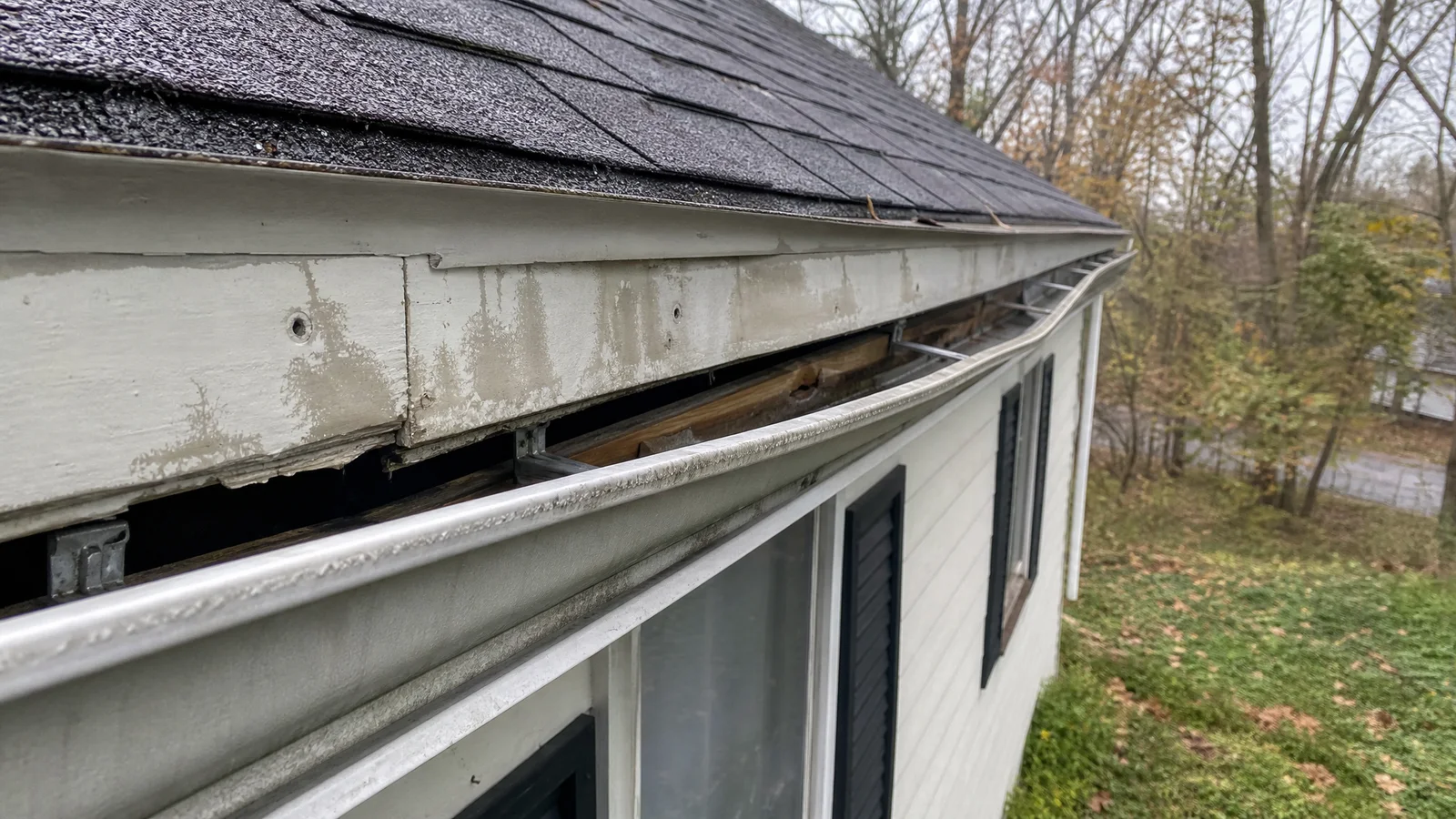
We often see property owners missing the early warning signs of a failing drainage system. Catching these subtle cues is the best way to avoid major water damage.
Our team knows that ignoring these signs leads straight to expensive structural repairs. Understanding common gutter problems roof damage indicators will help you protect your investment.
Let’s review the nine most frequent warning signs and discuss exactly how to address each one.
1. Sagging gutter sections
Gutters should follow a precise, gently pitched line to function correctly. Industry standards require a standard pitch of 1/4 inch of downward slope for every 10 feet of gutter run.
We know that any visible sag means this critical water flow is completely disrupted. A drooping section usually indicates the hardware is failing under excess stress.
Here are the most common causes of sagging gutters:
- Hangers are pulling out of the fascia board.
- The wood fascia is rotting behind the metal channel.
- Debris weight or winter ice damage is pulling the system down.
- Water flow to the downspouts is heavily compromised.
Urgency: Address this within a single season. Rehanging a loose section is a cheap maintenance task. Failing to fix it will lead to expensive fascia failure.
2. Gutters pulling away from the fascia
You might notice a visible gap forming between the metal channel and your house. This separation happens when fasteners fail or the wood behind the system begins to rot.
Our field technicians frequently see this because a single gallon of trapped water weighs about 8 pounds. That constant, heavy strain eventually rips older spike-and-ferrule fasteners straight out of the wood.
Water spilling behind the channel hits the fascia and soffit directly, accelerating the decay. Upgrading to heavy-duty hidden hangers provides a much stronger hold.
Urgency: High. Pull the compromised gutter section down immediately. Address any hidden fascia damage before rehanging the system securely.
3. Overflow stains on the exterior siding
Vertical dirt streaks below the roofline often point directly to a drainage failure. These ugly marks on your siding or foundation mean the system is overflowing regularly.
We usually trace this issue back to severe clogs, improper pitch, or blocked downspouts. Water cascading over the edges does far more damage than just ruining your exterior paint.
Overflowing water pooling around your home can wash out soil and damage the foundation perimeter.
Urgency: Medium. Clean the entire run thoroughly to remove all debris. Test the flow with a garden hose to ensure water moves swiftly to the downspout.
4. Standing water in the gutter after rain
Water sitting in the channel for more than a few hours after a storm is a major red flag. The pitch is likely incorrect, or a specific segment has formed a permanent sag.
Our experts constantly remind clients that stagnant pools create serious secondary issues. Mosquitoes require only 3 to 5 days to breed in standing water, and they only need a bottle cap’s worth of moisture to lay eggs.
Sitting water creates several cascading problems for your home:
- Accelerates metal rust and breaks down seam sealants.
- Attracts mosquitoes and other unwanted insects to your roofline.
- Adds continuous weight that severely worsens the existing sag.
- Forms a heavy ice mass in winter that can tear the system off the house.
Urgency: Medium. Flush the area with a hose to identify the exact low spots. Test the flow and re-pitch the hangers to restore a smooth downward slope.
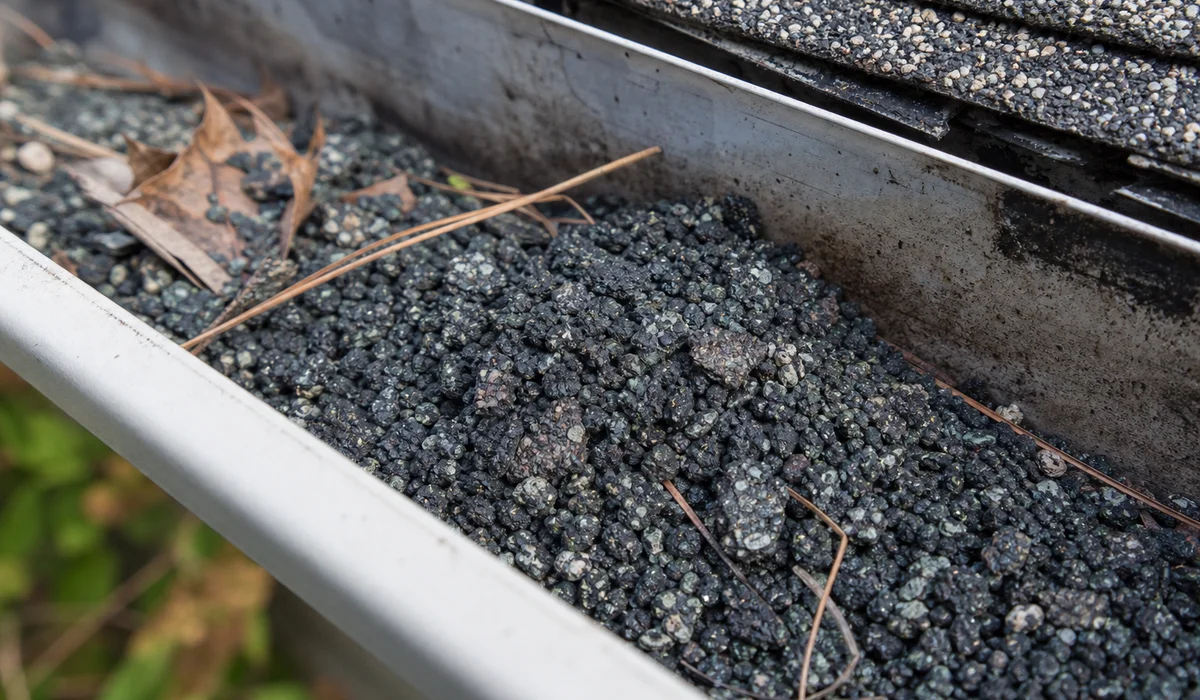
5. Granules in the gutters or on splash blocks
You may find colored grit that resembles coarse sand washing out of your downspouts onto the splash blocks. This material is the protective mineral surface of your asphalt shingles washing away.
We always inspect for granule loss during routine maintenance visits. Asphalt shingles typically last 20 to 30 years, and losing this coating exposes the fragile asphalt to harsh UV damage.
Understanding your granule loss can reveal vital clues about your roof’s health. Here is a quick reference guide to evaluating these common gutter damage signs:
| Amount of Granule Loss | Roof Condition Indicator | Expected Action |
|---|---|---|
| Small amounts (New Roof) | Normal settling process | None required |
| Increasing amounts (Old Roof) | Shingles are actively wearing out | Monitor closely |
| Large piles from one slope | Localized deterioration (often south-facing) | Schedule an inspection |
Urgency: Low immediate risk. This is not an emergency, but it serves as a clear signal that the roof is aging. Start planning for a professional assessment to evaluate the remaining lifespan of your shingles.
6. Plants growing in the gutter
Finding a small garden sprouting at your roofline means maintenance is long overdue. If seeds have germinated and plants are growing, the channel is packed with decomposed debris.
Our crews regularly pull thick layers of composting leaves and pine needles from neglected systems. This heavy mulch holds moisture constantly against the metal, accelerating severe corrosion.
Get this heavy sludge cleaned out immediately before something ugly happens. Ignoring this issue leads to permanent warping and inevitable seam leaks.
7. Leaks and seams
Water dripping steadily from a seam, end cap, or the downspout connection means the waterproofing has failed. Sealant degrades over time, or the metal joint has physically separated due to seasonal expansion and contraction.
We know from experience that standard sealants break down after 5 to 10 years of direct UV exposure. Water always finds the easiest path out, escaping exactly where it shouldn’t and dripping onto walkways below.
Common leak locations to inspect include:
- Corner miters and end caps.
- Seams between joining channel sections.
- The drop outlet connecting directly to the downspout.
Urgency: Medium. You need to clean the separated joint down to bare metal. Apply a high-grade polyurethane sealant to reseal or completely replace the damaged section.
8. Rotted or damaged fascia
Peeling paint, soft wood, or visible damage on the fascia board behind the metal channel indicate serious structural decay. When water backs up from a clogged or sagging run, it attacks the underlying wood directly.
Our team tracks construction pricing closely, and 2026 data shows replacing fascia boards averages $7 to $22 per linear foot in the US. A full replacement on an average home quickly climbs between $1,500 and $3,300 depending on the material used.
Urgency: High. Fascia repair often requires pulling the entire gutter system down first. Address the root cause immediately to prevent the rot from spreading deeper into your rafter tails.
| Fascia Material | Average Installed Cost Per Linear Foot | Durability Rating |
|---|---|---|
| Untreated Wood | $7 - $10 | Low |
| Aluminum Wrap | $8 - $20 | High |
| PVC / Composite | $10 - $22 | Highest |
9. Roof edge shingle damage
Missing shingles at the eaves, curling tabs, or visible damage along the drip edge point to moisture backing up under the roofline. Failing gutters force water under the drip edge, accelerating roof edge failure.
We check for proper metal drip edge compliance on every single inspection. The 2021 International Residential Code (IRC) mandates that a metal drip edge must overlap adjacent segments by at least 2 inches to properly protect the eaves.
Without this critical flashing, capillary action draws water upward into the unprotected wood roof deck.
Urgency: Assessment needed. You must determine if this is a drainage cause or simply a symptom of advanced roof age. Consulting a professional will clarify the exact source of the damage.
What to do
If you notice two or more of the signs listed above, it is time to take action. Protecting your home from water damage requires a fully functioning drainage system.
We look at the whole system to ensure every component works together properly.
See our gutter and drainage repair service or request a free assessment to get a comprehensive evaluation of your property.
Frequently Asked Questions
Why are there granules in my gutter? ▼
Granule buildup means shingles are wearing out and shedding their protective layer. In small quantities from a young roof it's normal; heavy loss from an older roof signals shingles near end of life.
Are sagging gutters urgent? ▼
Fairly urgent. They pull on fascia and spill water at the roof edge, causing rot. Cheap to rehang now; expensive if fascia damage develops.
How do I know if it's the gutter or the roof causing overflow? ▼
Test with a hose during dry weather. If water dammed up on the roof or spilled behind the gutter with clear gutters, it's a roof edge issue. If it overflowed the front with clean gutters and steady flow, pitch is wrong.
Ready to talk to a roofer?
Read about our gutter & roof drainage repair service or get a free estimate.