How Often Should You Inspect a Roof in Connecticut?
Inspect your CT roof at least annually and after major storms. Learn the seasonal timing that catches ice-dam and wind damage before it spreads.
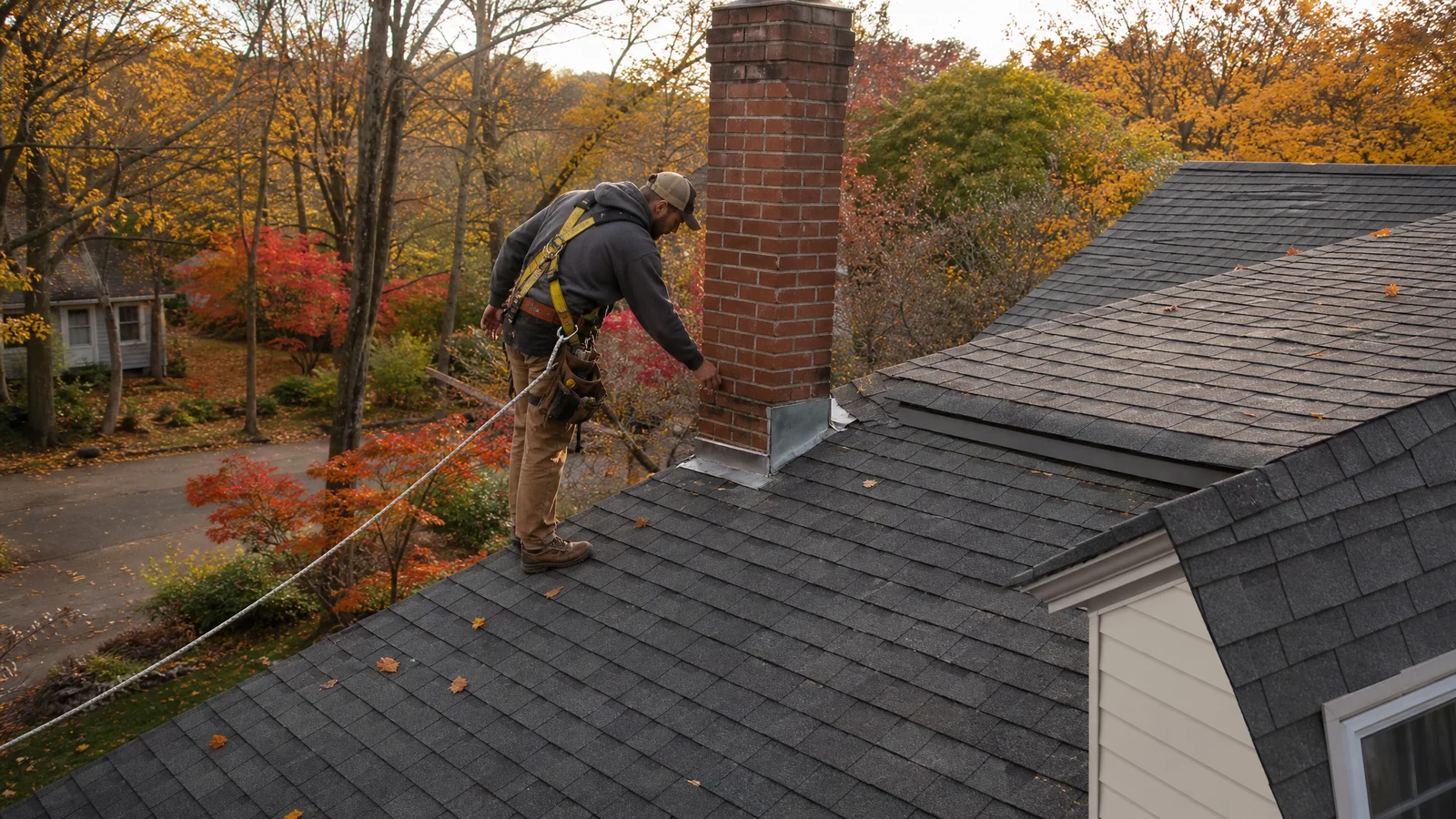
You probably know that routine exterior maintenance often gets ignored until a sudden leak ruins a ceiling. We see this exact mistake happen every season across Connecticut properties.
This simple oversight forces property managers into panic mode.
Our team put together this guide to clarify exactly how often to inspect roof structures before major failures occur. Catching a tiny lifted shingle early saves you from paying massive emergency repair bills. Let’s look at the baseline timelines and the specific weather factors that drive them.
The baseline
We suggest scheduling a professional roof assessment every two to three years for a standard residential property. This interval shifts to a strict annual check once the materials pass the ten-year mark. Our crews find that minor defects often escalate quickly after that first decade.
The National Roofing Contractors Association (NRCA) sets the industry standard for commercial and older residential systems. Following their guidelines helps property owners maintain active material warranties. We rely on these standards to establish a reliable cadence for local buildings.
Routine checks identify missing flashing before water penetrates the decking. A 2026 report from SquareDash notes the average Connecticut roof replacement costs between $10,200 and $14,400. We use regular checkups to keep you from paying that five-figure replacement bill prematurely.
Standard Assessment Timelines
- Every homeowner: One professional inspection every 2 to 3 years.
- Roofs over 10 years: Annual checks to monitor material degradation.
- Roofs over 20 years: Twice a year during the fall and spring seasons.
- After any major storm: Immediate post-storm assessment regardless of age.
Why fall matters most in CT
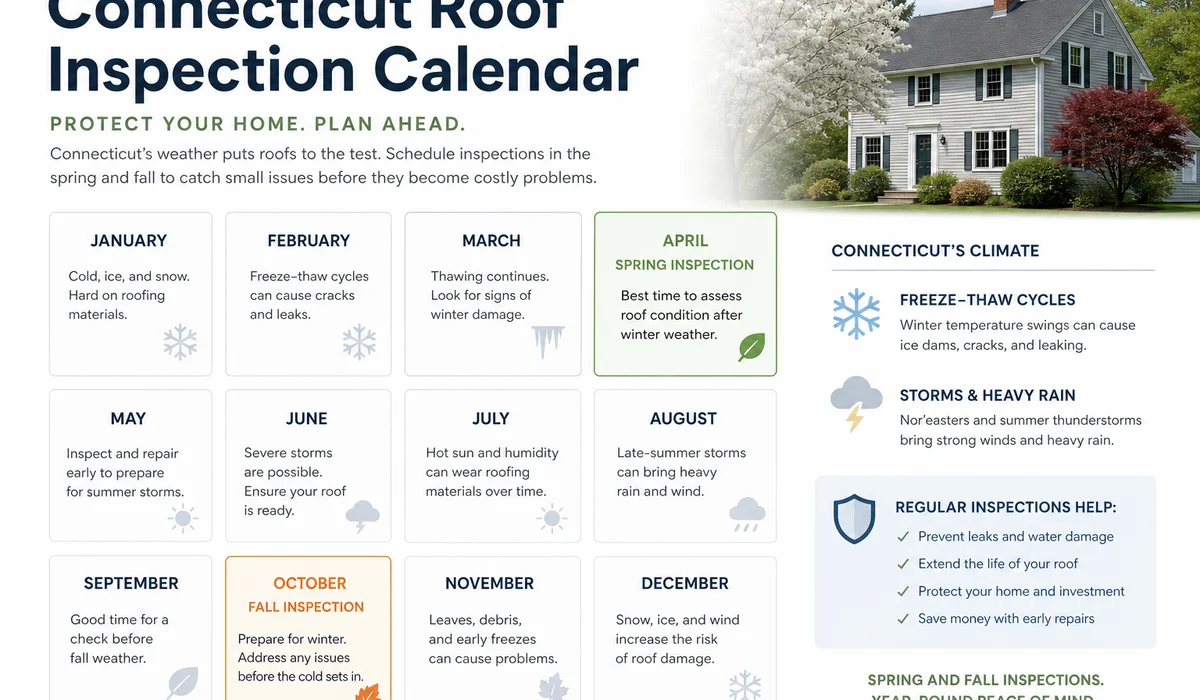
Fall is the most critical time for a roof inspection because it prepares your property for the brutal Connecticut winter. We use this time to fix summer storm damage before freezing temperatures compound the vulnerabilities. Catching a lifted flashing in October is far better than finding it in February when it has already caused an interior leak.
Winter weather throws heavy snow loads and freeze-thaw cycles at your asphalt shingles. Our inspectors prioritize checking the attic ventilation to ensure condensation will not build up during cold nights. The Insurance Information Institute lists freezing and water damage among the most frequent insurance claims for homeowners.
We focus heavily on preventing ice dams during these autumn visits. A professional ice dam removal in 2026 costs an average of $1,200, but major water extraction projects can exceed $4,000. Our technicians verify the integrity of your ice-and-water shield coverage at the eaves to stop this expensive winter threat.
Fall inspection focus
- Gutters cleared and functional.
- Flashing tight before ice dam season.
- Shingle field intact.
- Attic ventilation balanced.
- Ice-and-water shield coverage at eaves.
Why spring inspection matters second
Spring inspections serve as a necessary recovery check to identify what the winter weather destroyed. We look closely for lifted shingles, cracked underlayment, and gutter stress caused by heavy ice. Catching spring damage early beats letting it sit through the wet spring season.
A standard roof supports roughly 6,000 pounds of snow during a heavy storm. Our crews frequently find that this massive weight pulls gutters completely off the fascia boards. This structural stress also causes thermal shock damage to standard three-tab shingles.
We use the spring assessment to evaluate how well the decking survived the freezing temperatures. Gutter damage from heavy ice accumulation requires immediate attention before spring rains arrive. Our spring checklist directly addresses the aftermath of a harsh New England winter.
Spring damage warning signs
- Ice dam damage to shingles and underlayment.
- Wind damage from winter storms.
- Deck damage from ice weight.
- Gutter damage from ice weight.
- Flashing damage from ice movement.
After a major storm
You need to get professional eyes on the roof immediately following any severe weather event. We recommend an urgent check regardless of your last inspection date if heavy winds hit your neighborhood. Wind and hail damage on asphalt shingles is often invisible from the ground but very visible from the roof.
Wind creates an aerodynamic effect that accelerates airflow by 20 to 40 percent over the peak of your house. Our field teams frequently see standard shingles lifted and broken by localized gusts. Even minor 45 mph winds can break the adhesive seals on older materials.
Documenting this unseen damage creates a clear baseline for a potential insurance claim. We help property owners gather the right photographic evidence before secondary leaks occur. Even if you do not have interior water signs, a rapid response protects your structural decking.
Event-driven inspection triggers
- Named storms with winds over 40 mph.
- Hail-producing thunderstorms.
- Heavy nor’easters during winter.
- Tornadoes or severe weather warnings for your area.
Pre-purchase inspection
Buyers should always order a dedicated roof inspection before closing on a property. We emphasize this step regardless of what the current seller claims about the material condition. General home inspectors simply do not carry the specialized training needed to spot hidden roofing failures.
Ordering a professional roof check clears up any dangerous blind spots in a real estate transaction. Our commercial partners know that these specialized assessments typically run between $150 and $350.
A specialized roof evaluation is the cheapest piece of due diligence a buyer can purchase before closing on a property.
Replacing a roof out of pocket right after moving in could cost over $14,000 based on current Connecticut averages. We provide detailed reports that buyers can use to negotiate repairs with the seller. This single evaluation protects your down payment and your peace of mind.
When you don’t need to call
You do not need to call for a check if your materials are under ten years old and show no visible problems. We tell clients to save their money for something else in these specific situations. A property that had a professional inspection less than three years ago is usually safe.
Proper attic ventilation with standard R-38 insulation usually means your roof is doing its job just fine. Our team will gladly tell you to skip an assessment if no major storms have hit your area recently. You can comfortably wait if you have absolutely no interior water signs on your ceilings.
Safe to skip conditions
- Roof is under 10 years old.
- No visible problems.
- Last professional inspection occurred under 3 years ago.
- No major storms in the interim.
- No interior water signs.
What frequency looks like in practice
A practical inspection schedule aligns directly with the exact age and structural condition of your materials. We customize these maintenance timelines based on specific Newington weather patterns. Figuring out when to inspect roof ct properties comes down to proactive planning.
Routine checkups combined with event-driven assessments form a complete protection strategy. Our process ensures you only pay for the service you actually need based on the life cycle of the house. Roughly two to three routine checks per year make sense for older materials.
| Property Condition | Routine Schedule | Storm Response | Pre-Sale Action |
|---|---|---|---|
| 5-Year-Old Roof | Once in years 1 to 3 as baseline. Otherwise, no rush. | Get inspected after any major storm event. | Always inspect before any sale or refinance. |
| 20-Year-Old Roof | Fall (October) and Spring (April). | Get inspected within a week of any major storm. | Always inspect before any sale or refinance. |
Protecting your property long-term
Knowing how often to inspect roof systems gives you a massive advantage over unpredictable New England weather.
We want to help you maximize the lifespan of your asphalt shingles through smart, timely maintenance.
Take a quick walk around your property today to look for obvious debris. A simple phone call can prevent a minor gap from becoming a major structural disaster. See our roof inspection service for what’s covered, or book an inspection.
Frequently Asked Questions
When is the best time to inspect in CT? ▼
Fall before winter and spring after — plus after any major storm. Fall catches summer damage before ice dams form; spring catches winter damage before spring rains find it.
How often for an older roof? ▼
Roofs past 15 years benefit from an annual professional check. Past 20 years, twice a year is reasonable.
Do I need an inspection if there are no visible problems? ▼
Yes, at some interval. Many issues aren't visible from the ground until they've grown expensive. An occasional professional check catches problems early.
Ready to talk to a roofer?
Read about our roof inspection service or get a free estimate.